



Floating Down the Danube
How far, you ask, from Point A to Point B? Well, if you’re on my Viking River Cruise, the answer is thousands of kilometers over two glorious weeks of sailing the Danube. Our home on the water is the 250-passenger Rinda, whose 50 crew members, trained to pamper the heck out of us, earned a million on a scale of one to 10. After the first evening, they remembered my wine preferences (free during meals!), my companion’s allergy (walnuts!) and probably my birth sign and blood type.
Closet space is generous, and each cabin’s bathroom boasts premier toiletries plus a heated floor upon which to rest one’s tootsies. Swans float past our French balcony. Comfy chaises await on the observation deck.
We began our journey in Vienna, queen of European cities. Majestically adorned in Baroque plaster curlicues, she’s eternally ready for her close-up. The Rinda docked along the Danube Canal, a hike from the inner city accomplished by local tram. Following a morning’s bus tour along the Ring Road (Opera House, the Winter Palace and St. Michael’s Royal Church, where Mozart’s Requiem debuted), we jumped off in the epicenter of the city, facing that jaw-dropping architectural and spiritual wonder, St. Stephen’s Cathedral.
Set free to wander, I sped straight to Demel’s for a slice of its famous Sacher torte. Girded by sugar, I turned to the nearby Jewish Museum, where its current exhibit explores one woman’s forging an identity as a lesbian Jew. The Albertine Museum is a must for admirers, like me, of the bold-name artists of the 20th century, from Nolde to Chagall to Picasso, while the Belvedere is home to Klimt’s scandalous “The Kiss.”
Time for lunch, so I stop for a wiener schnitzel at that Old World charmer, Café Central, with waiters in tuxedoes and newspapers on a stick. That’ll hold me until tonight’s dinner aboard ship, with its nightly-changing menu featuring entrees including marinated veal, herb-crusted pork tenderloin and black truffle risotto — or, from the list of always-available “classics,” my frequent choice of Norwegian salmon (or choose chicken or Angus ribeye). Those still able to waddle may head to the lounge for the nightly live entertainment.
During the night, our ship glides into port in Slovenia’s capital city, Bratislava. We stroll past the Opera House anchoring the town’s main square, then wave to a gaggle of schoolboys slurping ice cream cones. We scurry past the medieval Plague Pillar, erected to plead with God to spare the city. I was in search of the town’s Holocaust Memorial (10,000 Jews were killed) and the small but captivating Jewish Museum nearby.
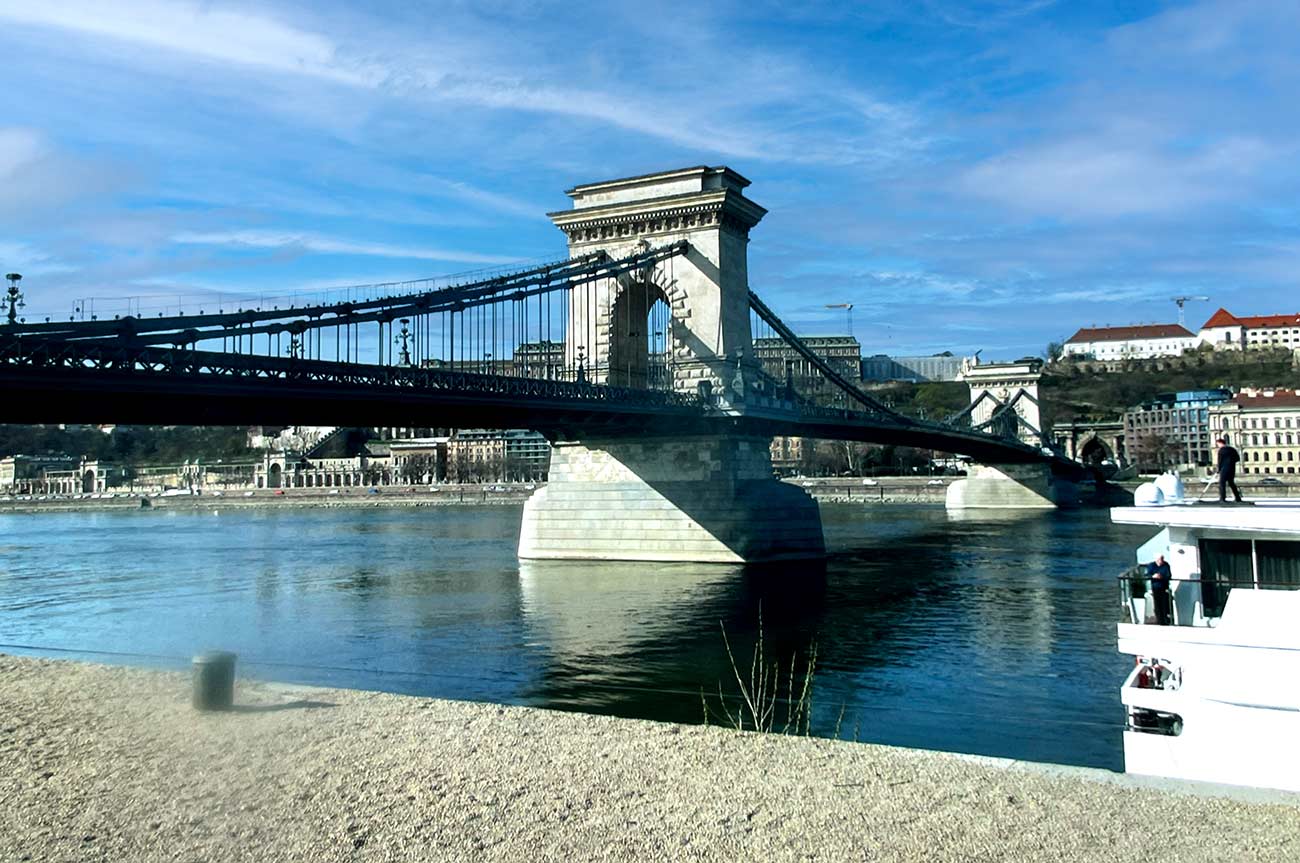
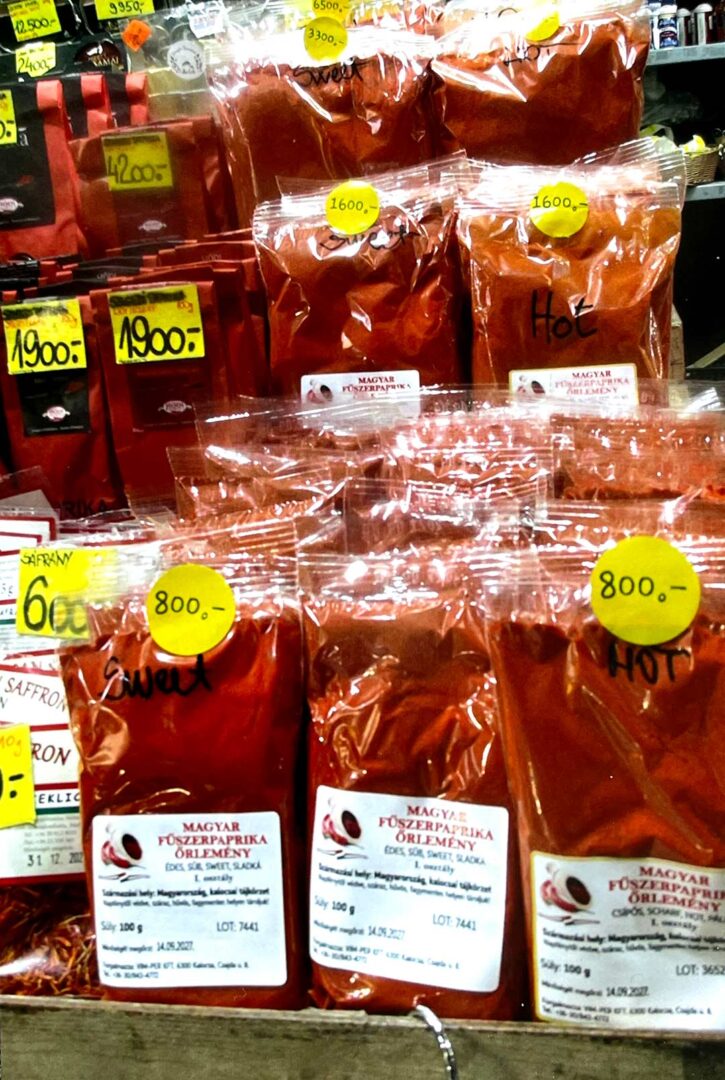
Sailing on, we pull into vivacious Budapest early the next morning, docking under its iconic Chain Bridge, just steps from the city’s inviting covered market — the place to stock up on paprika to spice up people-watching. The bridge connects bustling Pest with hilly Buda across the river, where a statue of St. Stephen guards the pretty Mattias Church, with its intricately patterned ceiling, and the Fishermen’s Bastion overlook beside it. We snap photos of the city’s iconic silhouette across the river, the wedding-cake Parliament Building — perhaps the most-photographed in the entire world.
A free afternoon lures us to Andrassy Boulevard, the town’s Fifth Avenue, lined with upscale shops (Rolex, Gucci), cozy cafes, a frilly Opera House and, our destination, the foreboding House of Terror. The museum documents repressive regimes of the city’s past — first the Nazis, then the Soviets. On the way, a peek at the landmark St. Stephen’s Cathedral, all tawny marble, to glimpse the saint’s own hand encased in a golden casket.
Back on board at dinner, I share a table with Trevor and Sandra, octogenarian travelers from New Zealand, and a Dutchman married to a Polish doctor. What’ll it be tonight: steamed cod in Champagne sauce or grilled veal with Parmesan polenta? Just say yes.
Can’t oversleep as we continue through Hungary to Pecs, a thousand-year-old town where a basilica honoring the 12 apostles was established in 1009, then destroyed/rebuilt/destroyed and finally rebuilt as a UNESCO site within its venerable Roman walls and burial chambers.
Aboard tonight, after dinner, we’re entertained by a vigorous Croatian band as we ease our way into Vukovar, Croatia, to visit its tiny history museum for an understanding of the deep horror of its bombardment during the brutal ’90s Serbo-Croatian war. To hear the story first-hand, we’re invited into the home of a family who were given 90 minutes to evacuate. “Our biggest problems today,” declares our guide, “are corruption, nepotism and brain drain.”
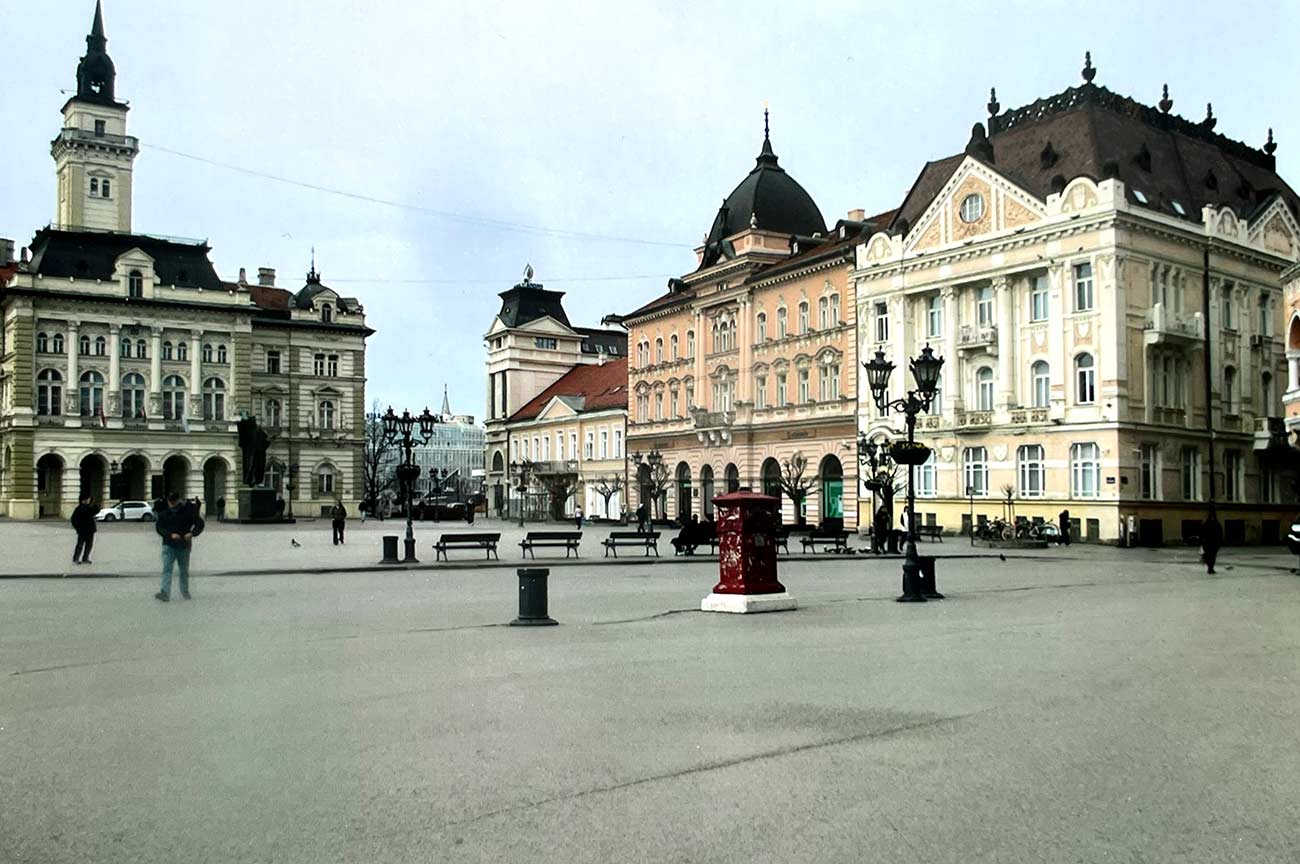
To hear the other side of the story, we dock in Serbia at Novi Sad, “the Serbian Athens.” And, because it’s Serbia, everything’s written in Cyrillic letters, and I’ve become illiterate. Serbia was part of the Soviet bloc until 1948, then ruled by “soft” communism (Coca Cola communism, they joke) under war hero Marshal Tito.
We explore the open-air market, Liberty Square with its shopping avenues, and a synagogue serving today as a cultural center (all Jews were herded out in 1944), where we are treated to a concert. We pop into a couple of art galleries, then trudge up Castle Hill to visit a trio of artists’ studios.
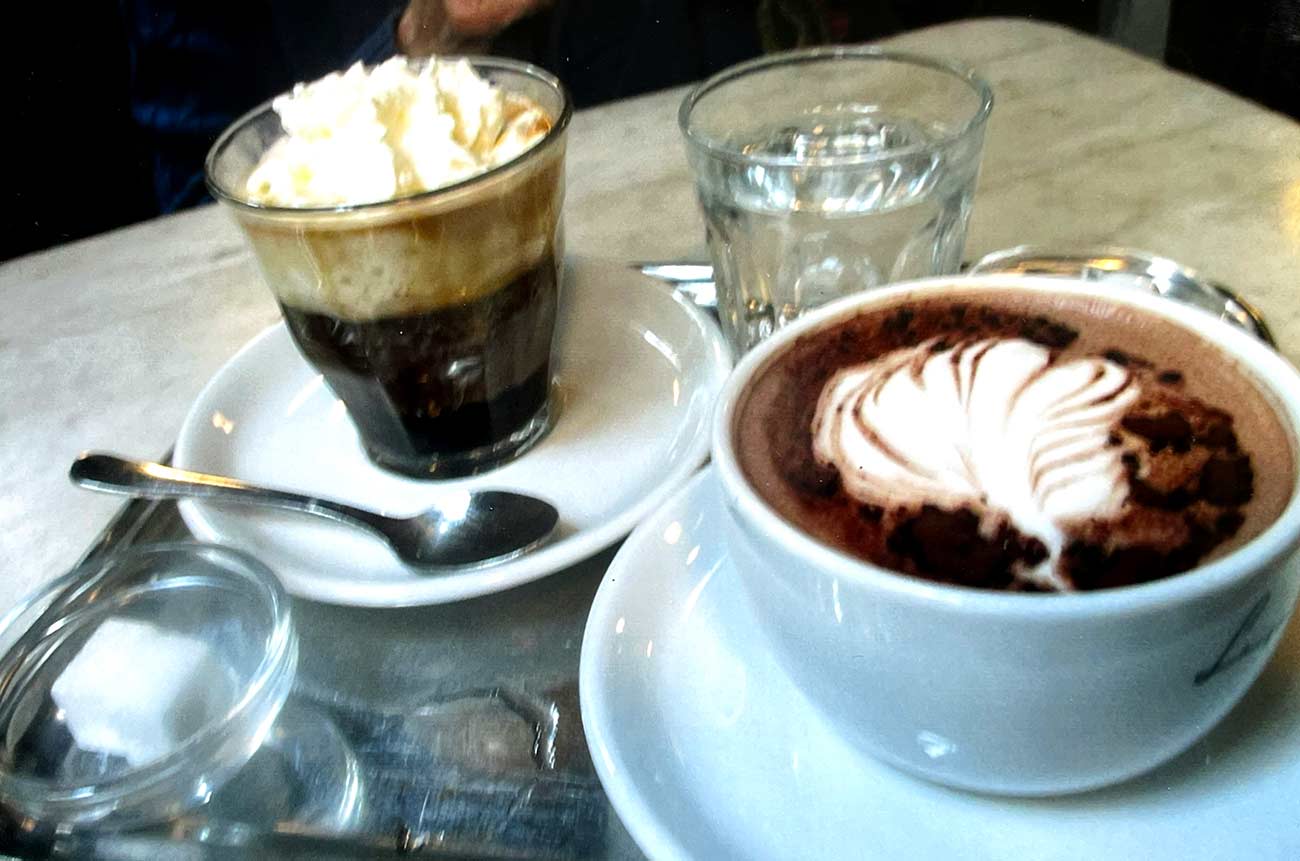
On to the capital city, Belgrade, whose scrappy citizens endured four wars in the recent past, including 78 days of NATO bombing, and now are battling rampant inflation. In retaliation to hard times, it’s now become a party town — and has been, actually, ever since the invading Turks installed the very first coffee shop in 1522.
A bus tour guide points out its art museum, a military fortress where the city first took root, the landmark Moscow Hotel, Parliament, Embassy Row and a museum-cum-shrine dedicated to anti-Russian Tito. Inside St. Sabo Orthodox Church, we gawk at its miraculous frescoes while learning of the church today, where statues are forbidden (frescoes instead), its priests must marry and St. Mary always wears red, a symbol of motherly love.
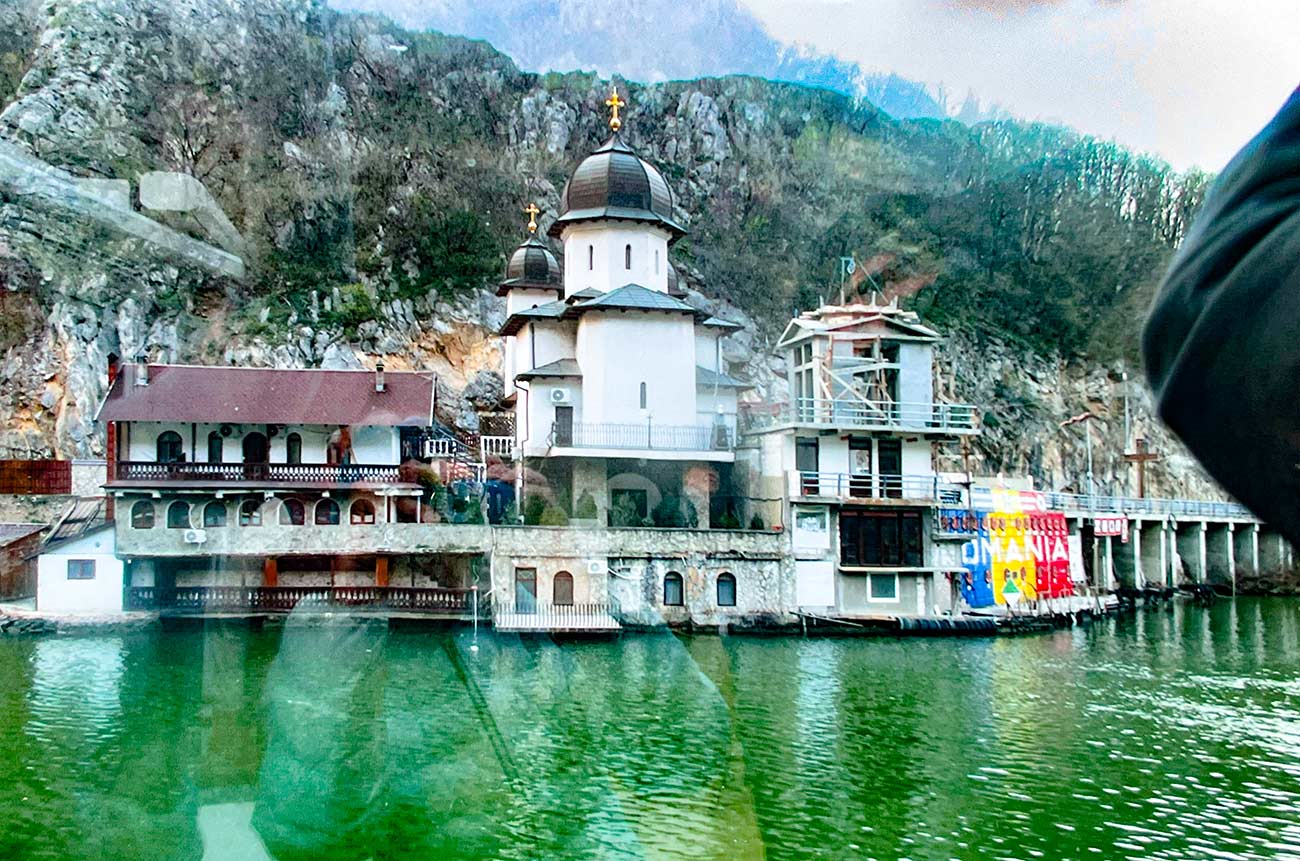
By morning, we set sail through gorgeous gorges pillared by sandstone cliffs as we approach the famed Iron Gate, camera ready. Staff ready, too: they greet us with mugs of hot chocolate spiked with rum! Dinner this evening features a Taste of the Balkans menu: lots of sausages delivered by (mostly) Filipino servers dressed in dirndls and lederhosen.
We wake to find ourselves in Bulgaria — Vidin, to be exact — dominated by the blue dome of St. Dimitrius Cathedral and a 13th-century castle/fort girded by a moat. Its synagogue now serves as a cultural center because only 18 Jews survived the Nazis. On the ecumenical corner where it stands, there’s also a mosque and an Orthodox church. And a street-corner coffee machine, which drew the most attention of all — just insert coins and out comes your cappuccino!
In Plevin, we learned of the still-painful Siege of Plevin by the Turks in 685 CE. There’s a painted panorama of the whole gory story. Many of us absorbed the feeling that Bulgaria is the most depressed, bleak and gray country of our tour. Back on board, tea time cheered us with all those precious little sandwiches and cakes that demonstrate civility. We sip and chew and contemplate Romania on the opposite riverbank, our next destination.
It’s No Kings Day, so lots of us gather on the top deck with homemade signs as we approach the Black Sea. We dock at Constanta to tour a casino-cum-experience center, close to Sts. Peter & Paul Cathedral and The Great Mosque, then bid our ship goodbye and bus it to Bucharest, Romania, our final destination.
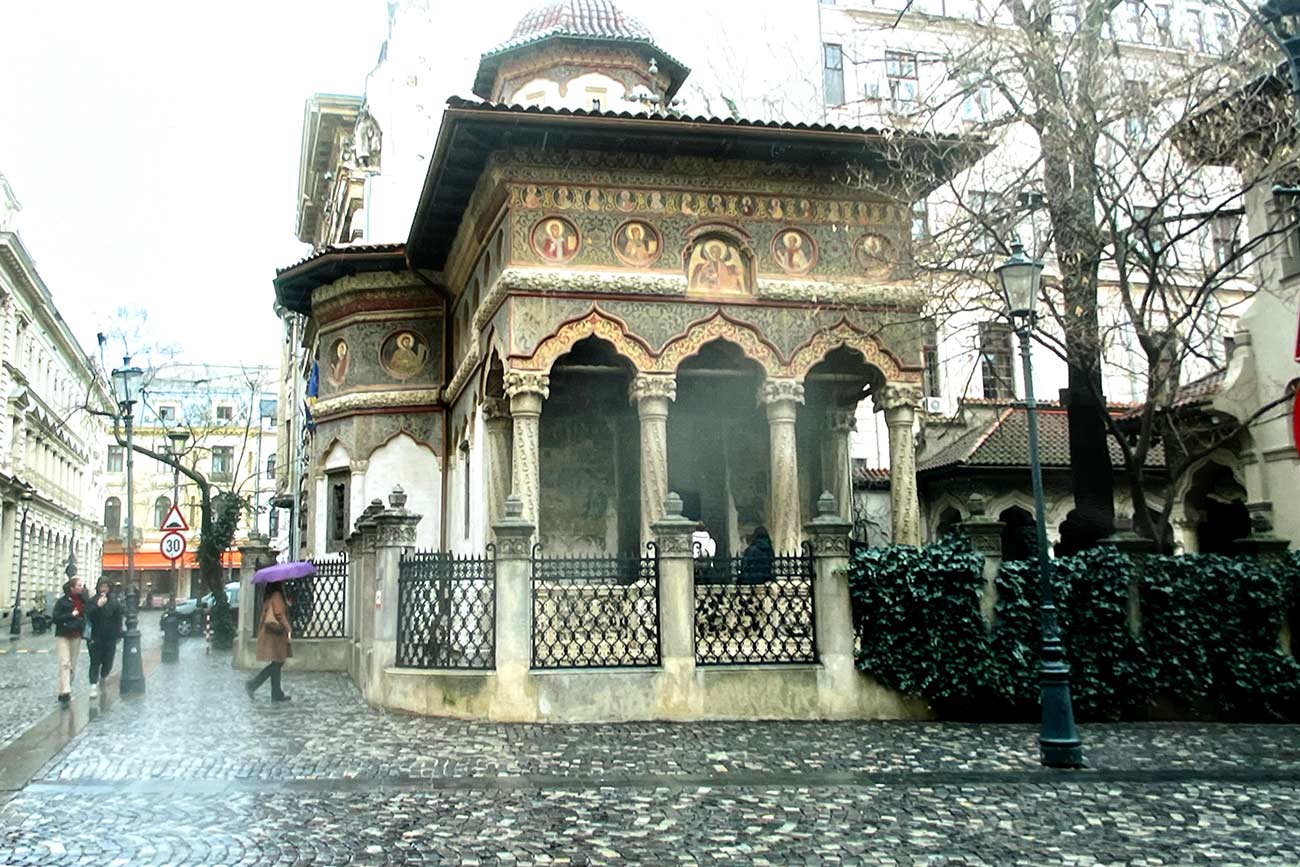
I’ve been to Bucharest two or three times previously, so it feels like home. I giggle at its plywood Arch of Triumph, erected by show-offy dictator Ceau?escu before a revolution in 1987 turned the tide (and cooked his goose). The city’s Old Town is the place to wander, crammed with trinket shops, bookstores, coffeehouses and whatnot. (Off the record, I bought a pair of pink suede shoes.) Succumb to the charms of its many Orthodox churches with potent saints painted, inside and out, on every surface. Peer into the barrel vaults, and there’s Jesus. Approach the altar, and there he is again, flanked by Mother Mary. Linger for vespers when resonating bass voices chant.
The premier place to eat, drink and be merry since the 1870s is Caru cu Bere, a lively beer hall featuring strolling violinists, dancers in ethnic costumes and huge portions of national dishes like stuffed cabbage with polenta topped with a lethal-looking pepper. If you fail to have a good time here, check your pulse.
And if you have a hard time saying goodbye to the city — and the crew and fellow guests aboard Viking’s Rinda — you’re not alone. Best cure: sign on at vikingrivercruises.com for another voyage.





5200 Willson Road, Suite 316 • Edina, MN 55424
©2026 Lavender Media, Inc.
PICKUP AT ONE OF OUR DISTRIBUTION SITES IS LIMITED TO ONE COPY PER PERSON