


Halestorm’s Lzzy Hale hopes to make hard rock a queer haven
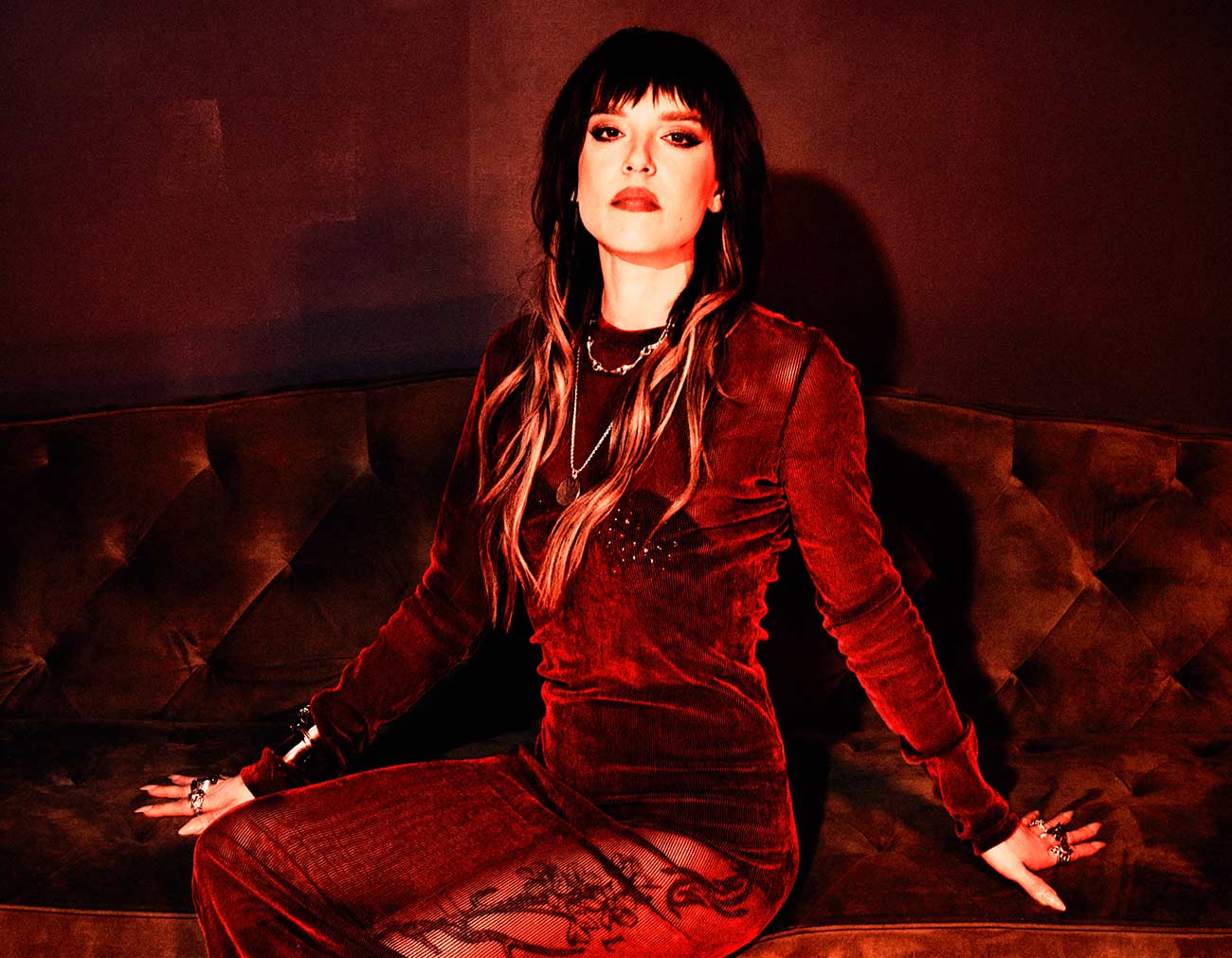
The bisexual songstress talks about the impact of being openly queer and the value of authenticity in music
On a dreary mid-February day in St. Paul, Lzzy Hale (spelled purposefully without the “i”), frontwoman for Grammy-winning hard rock outfit Halestorm, calls me from her home in Nashville. Her voice is bright, mid-range with a light rasp, hinting at the powerful, Ann Wilson-style belting she unleashes when singing. She stumbles a bit over her answers, as if she’s chasing all of her thoughts before they get away, unshared.
Preparing for this story was a throwback. My sibling and I, two queer kids from semi-rural Wisconsin, got into hard music to channel our closeted teenage angst, and I remembered Halestorm from those days. It felt a little surreal to talk to her now.
Hale, 42, comes from a similar background, growing up bisexual in small-town Pennsylvania. It was her experiences feeling like a misfit, she says, that shaped her belief that rock and roll should be a sanctuary for the downtrodden.
“I didn’t necessarily fit in with the girl crowd and all of the music they were listening to, and I’d be trying to introduce them to the stuff that I was into, and they weren’t having that,” she says. “Rock and roll and heavy music doesn’t care about who you like to kiss. It truly doesn’t matter here. So I think, for me, from a very early age, that’s where I saw myself.”
Of course, it matters to the people who see themselves in Hale, a Grammy Award-winning musician and powerful singer who has made music her livelihood for almost 30 years now.
Hale formed Halestorm with her brother, Arejay, in 1997, when they were both teenagers. In 2013, they won the Grammy Award for Best Hard Rock/Metal Performance for their song “Love Bites… (So Do I),” becoming the first female-fronted band to both be nominated and win in that category and beating out juggernauts like Iron Maiden and Megadeth. Now they’re a little over seven months removed from their sixth studio album, “Everest,” for which Hale says they’re preparing to tour this year.
It’s an apt title, likening the band’s decades-long journey towards success and their famously lengthy tours to ascending the world’s tallest mountain.
“We’re obsessed with the one thing that we actually can all do right,” Hale chuckles. “All eggs in one basket. That kind of added edge of scariness kind of kept us going.”

Included on “Everest” is the soulful bisexual anthem “Like A Woman Can,” which Hale calls, “Venus asking Mars to meet her in the middle while in the midst of a bisexual awakening.”
It’s not the first time Hale has crooned unshyly about her sexuality. “Do Not Disturb,” off their 2018 album, “Viscious,” is a lewd romp through a one-night stand with someone of an unspecified gender who Hale tells, “And if I were you, I’d bring your girlfriend, too.”
Hale had long come to terms with her sexuality before she unintentionally yet casually came out over Twitter in 2015.
“I said something like, ‘Well, y’know, as a bisexual…’ and it was like, ‘Oh, really?’ and I’m like, ‘Oh yeah, I guess I haven’t really talked about that,” she recalls. “But it’s given me so much more than it’s taken away. I get so much love, and there is so much trust that so many of our fans put in me.”
Hale says young queer kids at meet and greets will share their life stories with her, sometimes things they haven’t even told their parents yet, which she says she cherishes.
“I think about when I was a young, confused kid, and I wish that I had had somebody to talk to. Even if they didn’t understand, to at least be like, ‘Hey, I’m at your side,’” she says. “I think my 13-year-old self would be very proud that I can be one of those people for even complete strangers, you know?”
Given her lengthy career in music, Hale has also paved the way for today’s up-and-coming woman-led hard rock groups. I tell her one group that came to mind was Mannequin Pussy (“I love those guys so much,” she says), and ask if there are any other groups that remind her of a younger Halestorm.
“Amyl and the Sniffers, there’s something so incredibly pure about them,” Hale says. “Here’s a band that says, ‘Hey, this is who we are, and we actually believe what we’re saying.’ I’m like, ‘Yes, absolutely. I believe you.’ It does remind me of my younger self, back before anybody cared about anything that I was doing.”
I mention how jarring it is to see Amyl and the Sniffers at the Grammys and other highbrow events, given their roots in Australian hardcore punk.
Hale replies, “When we were watching them at the Grammys, I was like, ‘All right, they’re infiltrating the system! This is a heist!’”
Indeed, what Amyl and the Sniffers and Mannequin Pussy and Halestorm all do is cut through the commoditization that fuels the music industry, reminding the world of the real people at its core, playing, listening and sharing their truths.





5200 Willson Road, Suite 316 • Edina, MN 55424
©2026 Lavender Media, Inc.
PICKUP AT ONE OF OUR DISTRIBUTION SITES IS LIMITED TO ONE COPY PER PERSON