


A Word In Edgewise: Rose Valland: Going the Extra Mile — and Beyond
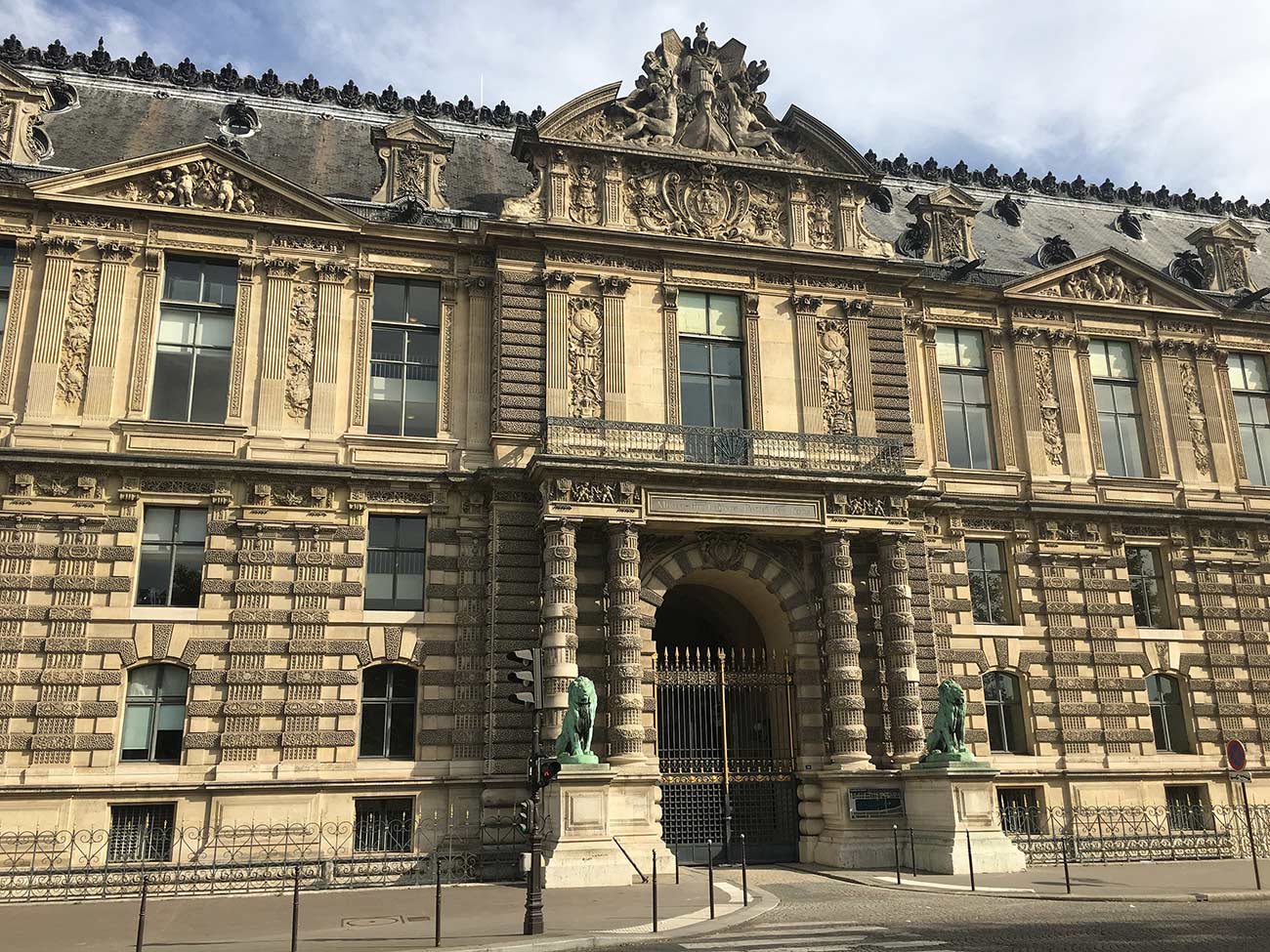
In his foreword to the revised English translation of Rose Valland’s 1961 memoir, “The Art Front: The Defense of French Collections 1939-1945),” Robert M. Edsel recounts her birth in November, 1898, her early studies in Lyon and her transfer to Paris, obtaining degrees in art and art history from the École nationale supérieure des Beaux-Arts, the École du Louvre and the Sorbonne. In 1932, she landed a job as an unpaid assistant at the Jeu de Paume museum, close to the Louvre and the Tuileries Garden in central Paris.
These specifics of location, Valland’s art background and her dedication to her nation’s art treasures became crucial to the nation once Hitler’s forces struck and Paris fell on June 22, 1940.
The Nazis took over the Jeu de Paume as a central clearinghouse for their looted artworks and valuables. But they allowed the now 41-year-old, bespectacled, hair-in-a-bun, unobtrusive Valland to remain as a French presence for show and museum upkeep (and, under orders of her boss, Jacques Jaujard, Director of National Museums).
Although the nation’s museums had already moved their most valuable works to various French chateaux, there continued a constant flow of looted art treasures from Jewish sources; family collections, dealers, the very homes of those removed by Nazis. The invaders precisely catalogued all these items — information secretly copied by Valland. Unknown to her overseers, she was fluent in German and had an eidetic memory.
Day after day, Valland made notes, photographically copied records at night and listened to gossip during the day, passing information along to Jaujard at the Louvre. Her small office was in charge of the phone calls; she listened. She deciphered carbon copies and printed or made negatives of Nazi photographs.
“The Art Front” text is almost dry compared to the daily physical dangers Valland faced and overcame, but when she first published in 1961, many on both sides were still alive, so Valland let the files speak for themselves. The facts are compelling. This English edition is footnoted, and Valland’s calm voice and straightforward narration highlight the turmoil in the nest of the Nazi elite, grabbing for the spoils.
Hitler himself wanted certain items, e.g., Vermeer’s “The Astronomer,” for his fantasy Fühermuseum to be erected in Linz, while Göring, second in command and self-proclaimed art authority, wanted whatever he could personally collect from the museum, ever scheming to outmaneuver the other jackals circling the treasure. Göring, sometimes with his art agent, Bruno Lohse, made 21 recorded trips to the Jeu de Paume. On July 27, 1943, Valland witnessed and recorded the Nazi burning of “degenerate” modern works by the likes of Picasso, Dali, Miró and Klee. When denied, she had the proof.
Valland recounts the battle to the very end in August 1944, as crowds filled the Place de la Concorde and the Tuileries to welcome their liberator. Sudden rooftop shots brought chaos; the Jeu de Paume was swarmed. Trying to keep the panicked public from entering the art-filled basement, Valland herself was suspected and “was forced to lead a search of it with a tommy gun levelled at my back.”
The Liberation of Paris and the arrival of the American Monuments Men did not mean Valland’s work was done. Trust did not come easily; she did not readily divulge her knowledge. In time, “when the time is right,” as she’d promised, Valland accepted Lieutenant James J. Rorimer as an ally, and, after French officials finally realized she would be of greater use in Germany, was given her commission, joining the French First Army as a lieutenant and a Fine Arts Officer.
Between October 18, 2009, and January 10, 2010, I, and scores of others who flocked to the MIA’s “The Louvre and the Masterpiece,” could approach Vermeer’s “The Astronomer.” For this unique opportunity, we must thank Rose Valland. Her meticulous documentation led the Monuments Men to Austria and the Altaussee Salt Mine, where, looted in Paris from the Rothschild family, Vermeer’s gem had travelled on Hitler’s personal train and was buried. Recovered, the masterpiece was returned to the family, later acquired by the Louvre, and, briefly, swam into our ken.






5200 Willson Road, Suite 316 • Edina, MN 55424
©2026 Lavender Media, Inc.
PICKUP AT ONE OF OUR DISTRIBUTION SITES IS LIMITED TO ONE COPY PER PERSON