


A Word In Edgewise: Not Enough on Your Plate, Yet?
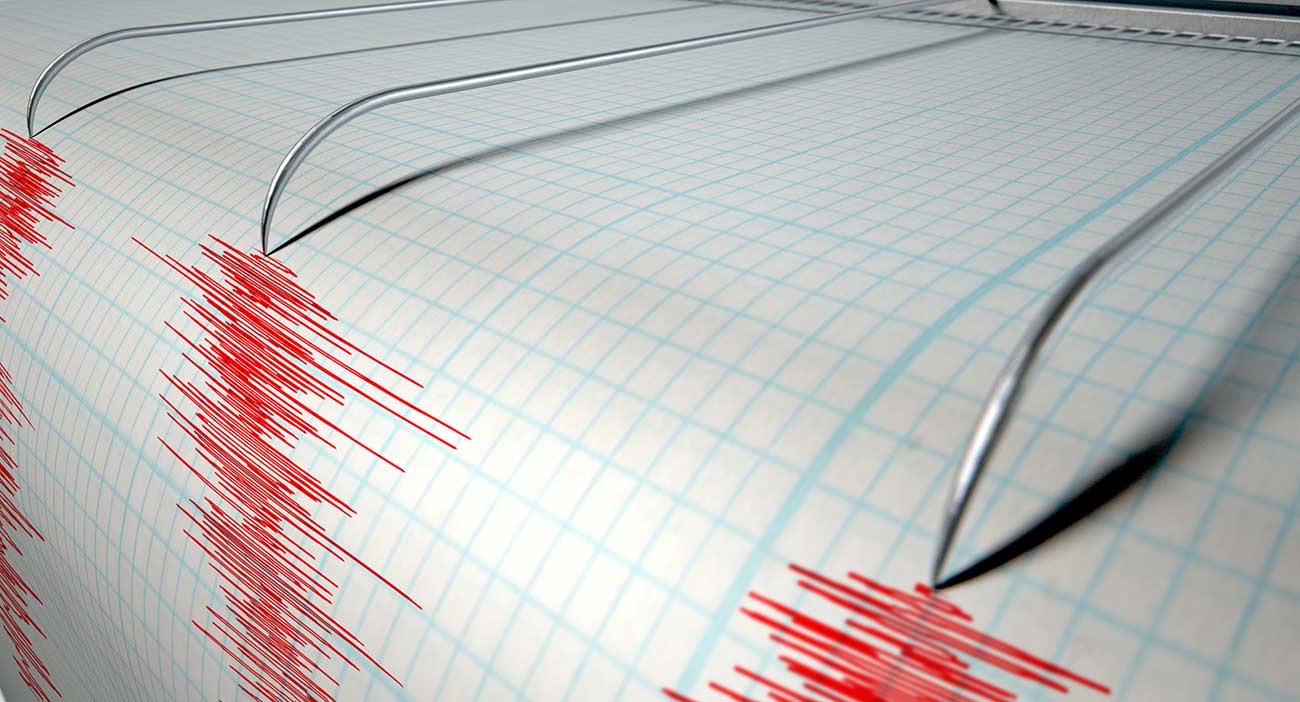
Among the articles printed in The New Yorker’s centenary issues is a particularly thought-provoking one: Kathryn Schultz’s “The Really Big One” from the July 13, 2015 issue.
One of many aspects of earthquakes Schultz imparted was, “Every fault line has an upper limit to its potency, determined by its length and width, and how far it can slip.” Familiar San Andreas’s upper limit is somewhere around 8.2. Nothing you want to be strolling on, but the Richter is a logarithmic scale, and Schultz stresses that 8.2 is only 6% of the rumble in Japan in 2011. (Tsunami? Fukushima? 18,000 dead?)
No one 45 (now 55) years ago had even heard of the Cascadia subduction zone, mainly because belief in Earth’s tectonic plates didn’t take hold until the mid-1960s. Earthquakes happen frequently along the Ring of Fire — that band of subduction zones circling the globe from New Zealand to Indonesia to Japan, Alaska, and on down the west coast of the Americas to Chile — but not every area hews to the same time schedule. While small quakes are routine in Japan, the Juan de Fuca hasn’t produced any within written history. This oceanic microplate, located between the Pacific Plate and the North American Plate, is currently being subducted under the North American Plate at the Cascadia subduction zone along the coasts of Washington and Oregon.
A breakthrough came in the 1980s when geologist Brian Atwater and grad student David Yamaguchi considered Washington’s Ghost Forest of red cedar skeletons on the Copalis River. Their tests showed that the trees had died from saltwater — simultaneously. The trees’ final rings dated to 1699, while growing seasons indicated annihilation between August 1699 and May 1700. The salt-water death is more horrifying when considering the cedars weren’t assaulted by a giant wave, but were subducted — sucked under water to their heights, held — then popped back up.
Corroboration lay 5,000 miles to the west. The Japanese have kept tsunami records since 599 AD, and listed the specific day a 600-mile wave struck the coast, with no discernible origin — no quake.
In a 1996 issue of Nature, seismologist Kanji Satake and colleagues matched a 9 p.m. January 26, 1700, a magnitude 9.0 quake with the Pacific Northwest’s sudden land and coastal forest subsidence, figuring it took 15 minutes for the eastern half to strike the Northwest coast, and 10 hours for the other half to cross the ocean to Japan on January 27, 1700.
In 1964, Chief Louis Nookmis, Hun-ay-aht First Nation, related an old tale of Vancouver Island’s Pachena Bay people, of a nighttime land-shaking. Another tribal account related, “They sank at once, all were drowned, none survived.” A time was pinpointed, old tales were validated.
Schultz describes paleoseismologist Chris Goldfinger’s lab at Oregon State with its freezer-full of 4”x5’ cylinders containing seafloor samples tracing back 10,000 years. From these, it was determined that during this period, the Pacific Northwest has undergone only 41 subduction zone earthquakes, or 243 years on average for the Cascadia subduction’s recurrence level. This is only an average, but it would indicate that from the cataclysm in 1700, we’re now 315 years into a 243-year cycle.
What has changed in the past decade in light of our new knowledge? A quick online search showed it would seem to be “not much.” This is not to ignore the ShakeAlert Early Warning (EEW) and some increases in early warning systems, but a catastrophe of this magnitude leaves little margin. A first warning will be a “compressional wave,” high-frequency and fast-moving, audible to your dogs — but not you — detected 30 to 90 seconds ahead,if warning systems are in place. Enough time to shut down power plants and railways and alert hospitals. But if you’re able to race to your car, others will to theirs, all clogging the same roads out. Once the dogs start barking, it’s probably already too late.




5200 Willson Road, Suite 316 • Edina, MN 55424
©2026 Lavender Media, Inc.
PICKUP AT ONE OF OUR DISTRIBUTION SITES IS LIMITED TO ONE COPY PER PERSON