
A Word In Edgewise: Burning Through Ancient Life — A Ride on the Wild Side
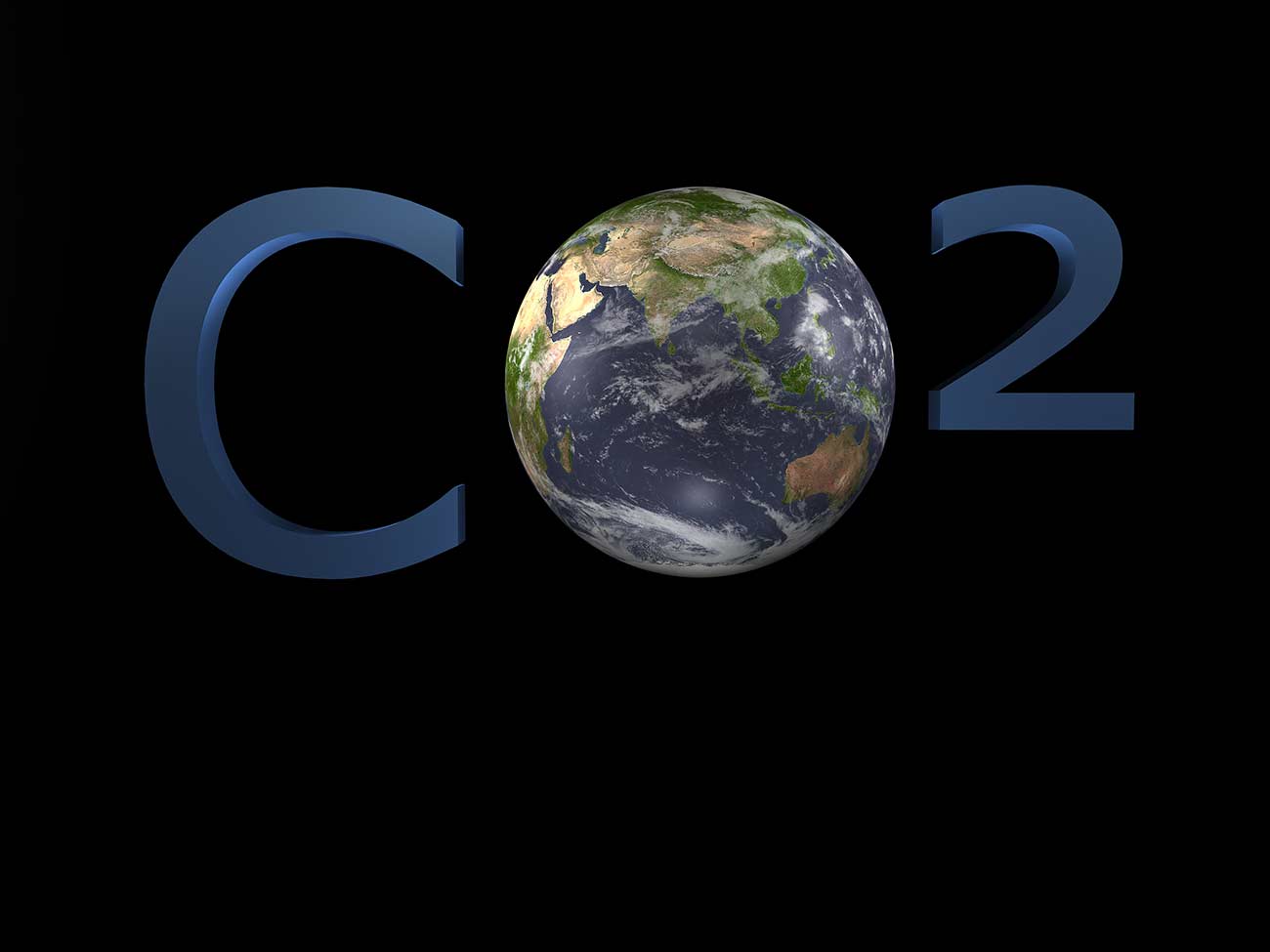
I’d never before considered dinosaurs to be among the most successful clades of all existing creatures to walk the Earth. On the other hand, I didn’t know what a “clade” was either, until I delved into Peter Brannen’s recently published “The Story of CO2 Is the Story of Everything.”
According to Brannen, carbon dioxide, CO2, is the mover and shaker of all things, the key to what has kept Earth habitable (sometimes barely) — in essence, the molecule from which all life springs. Essential to life, yet too much CO2 is capable of bringing it all to an end.
CO2 preceded O2 on Earth, and its movement — through rocks, air, water and life itself — has kept the machinery in motion, despite several near extinctions. Brannen makes one thing quite clear. It’s only by looking at the entire history of our planet (about 3.5 billion years) that we can evaluate the dangers we as humans are creating with that molecule.
All of the five (or six) extinctions, excepting the meteor that extinguished the dinosaurs, were caused by gross anomalies in the carbon cycle where vast amounts of CO2, sequestered from deep time and many millions of years, were either sent out into Earth’s atmosphere, causing super surges of effects we’re seeing now, in humanity’s present, or deprived from the atmosphere to such a low percent a Snowball Earth extinguished life. CO2 is both demanding and fickle.
Antoine Lavoisier, 18th-century French chemist, determined, via a distressed guinea pig, that “Respiration is thus a very slow combustion process similar to that of coal,” quotes Brannen. In biochemist Nick Lane’s paraphrasing: “In the end, respiration and burning are equivalent; the slight delay in the middle is what we know as life.” Both use O2 to burn plant material, returning it to CO2 and water while releasing energy through “work.”
Just as Lavoisier made his discovery, Brannen points out that James Watt used coal (organic carbon) to power his new machine, which “universalized the work that fossil fuel could perform.” Think Deep Time: we’re not gassing up simply on deceased dinosaurs, but on fossil fuels built up in the preceding hundreds of millions of years. Matter that sank directly into the oceans bearing its CO2 freight that waited through those eons for James Watt to turn the key to open the gates to the Industrial Revolution.
Brannen acknowledges that while huge supplies of fossil fuels will remain, even with humans releasing massive amounts of CO2 into the atmosphere, it would take quite a while for it to all come toppling down, if ever… Except, and this is the dicey part, we’re emitting carbon daily, yearly, at a rate some 10 times faster than the Siberian volcanoes were at the End Permian Extinction, or “The Great Dying,” when Earth almost bit the dust. Siberia’s thousand-foot sheets of magma, blocked in their ascent, burst sideways through carbon-rich materials, spewing a lethal burst of CO2 into the atmosphere, killing off pretty much all life, large and microscopic. A hair’s breadth to everything.
The kicker is, it’s all about rate. Earth rallied from the Permian, but we don’t know, and probably shouldn’t chance, that a lethal surge of CO2 emitted not on Earth’s extended time period, but “suddenly” in humanity’s comparative Mayfly-lifespan, wouldn’t be much worse. This could reprise fatally the Permian near-catastrophic symptoms; extraordinary global warming, ocean acidification and deoxygenation. Some creatures, somewhere, might survive, but not humanity. CO2 may get us in the end; it nearly did five other times. But consider again the dinosaurs:
Many are familiar with the supercontinent Pangaea, where dinosaurs appeared in the Triassic. The landmass breakup allowed the dinos, traveling on dispersed chunks, to be scattered worldwide, evolving into different species. The Chicxulub Impactor, not CO2, erased them. If that giant rock hadn’t smashed its 6-9 mile-diameter self into Mexico, dinosaurs might still reign. They’d been around for some 279 million years without disrupting the coal cycle. They might still be waxing strong, the supreme clade of creatures who ever strode upon the Earth. Who knows…
*Clade: a group of organisms that includes a single common ancestor and all of its descendants — a complete evolutionary unit.

5200 Willson Road, Suite 316 • Edina, MN 55424
©2026 Lavender Media, Inc.
PICKUP AT ONE OF OUR DISTRIBUTION SITES IS LIMITED TO ONE COPY PER PERSON