

When Growth Means Survival: Inside Avenues for Youth’s Shelter Expansion
What does it mean to outgrow? Often, we view growth as a reason to buy new, something to be celebrated. A new blouse because the last time you wore your current one was in middle school, and you are now entering college, a fresh set of sneakers because Twinkle Toes (you hate to face it just as much as you hate to say it) just aren’t as cool anymore.
Yet, for the nearly 4.2 million youth and young adults experiencing homelessness in the United States, growth is not a quiet celebration or a rite of passage, but rather a forced reckoning that requires leaving behind not just clothes or trends, but homes, stability and basic levels of safety before they are ready to do so.
When I learned about the expansion of the over 90-year-old shelter for homeless youth, Avenues For Youth, it initially brought me the familiar excitement we often associate with renovations and structural improvements. But that feeling was quickly replaced by a sobering reality: this expansion exists not because of growth alone, but because of a community in dire need.
On a national level, up to 40% of youth who experience homelessness yearly identify as LGBTQ+ and are 120% more likely to experience homelessness than their heterosexual/cisgender peers due to being kicked out, mistreatment because of their identity and family instability. And, according to the National Alliance to End Homelessness, the number of youth experiencing homelessness increased by 33% between 2023 and 2024, the highest increase of any age group.
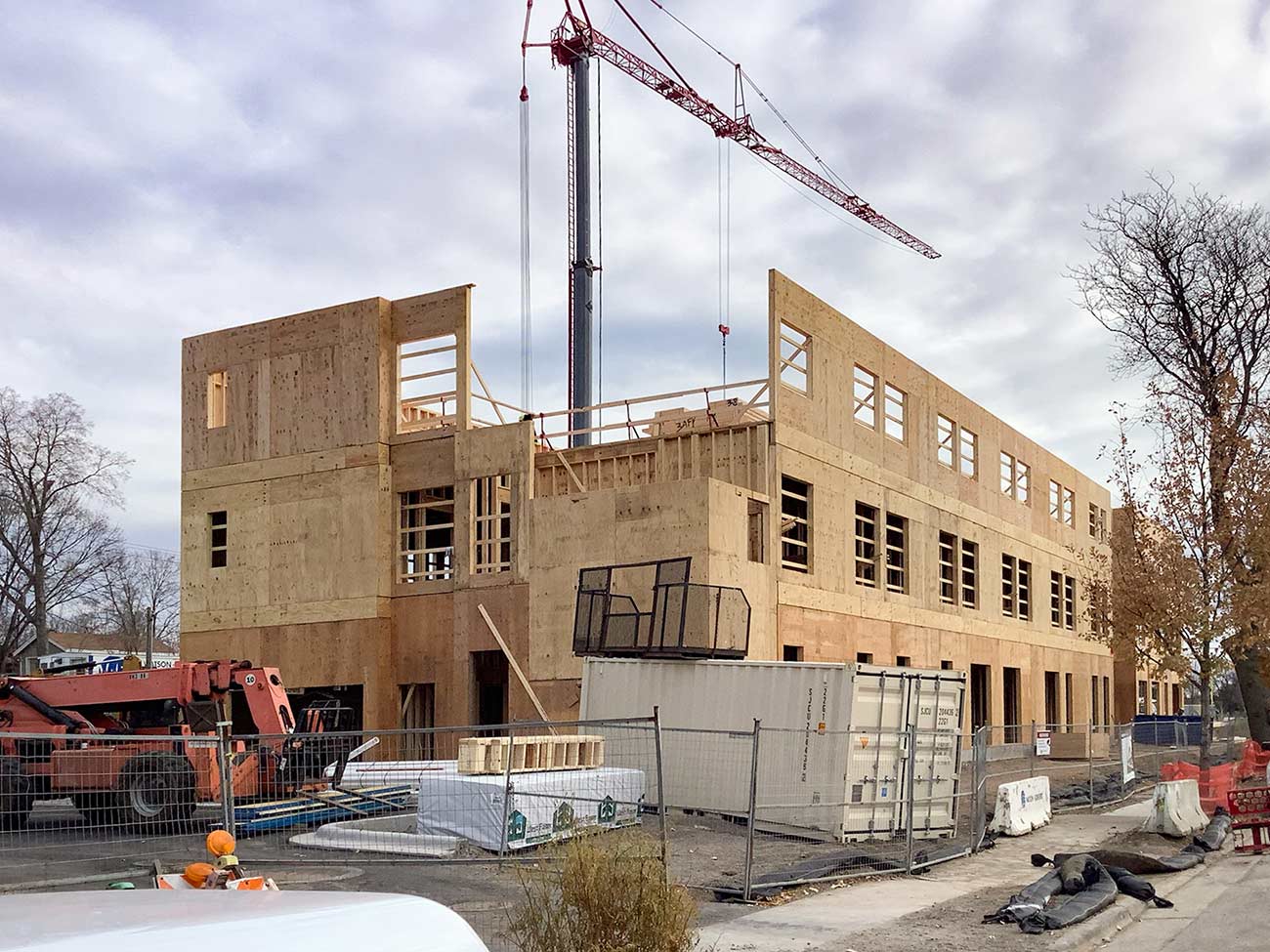
The expansion project began in 2018, says Katherine Meerse, executive director of Avenues for Youth. Although COVID-19 slowed down the expansion process, a new facility is projected to be completed by summer 2026.
“I want for young people to be healthy, for them to get a good education, for them to be able to dream, and then go after their dreams,” Meerse says. “It’s not impossible to do that if you don’t have housing, but boy, it’s a whole lot harder.”
Upon entering Minneapolis Avenues, the organization’s first facility, it is clear that all are welcome. Graffiti-inspired art decorates the wall and LGBTQ+ flags line the opening archway. Yet, the space is dated, with no elevators, cramped stairways, and 17 youth sharing two bathrooms on the second floor, tripling up in bedrooms.
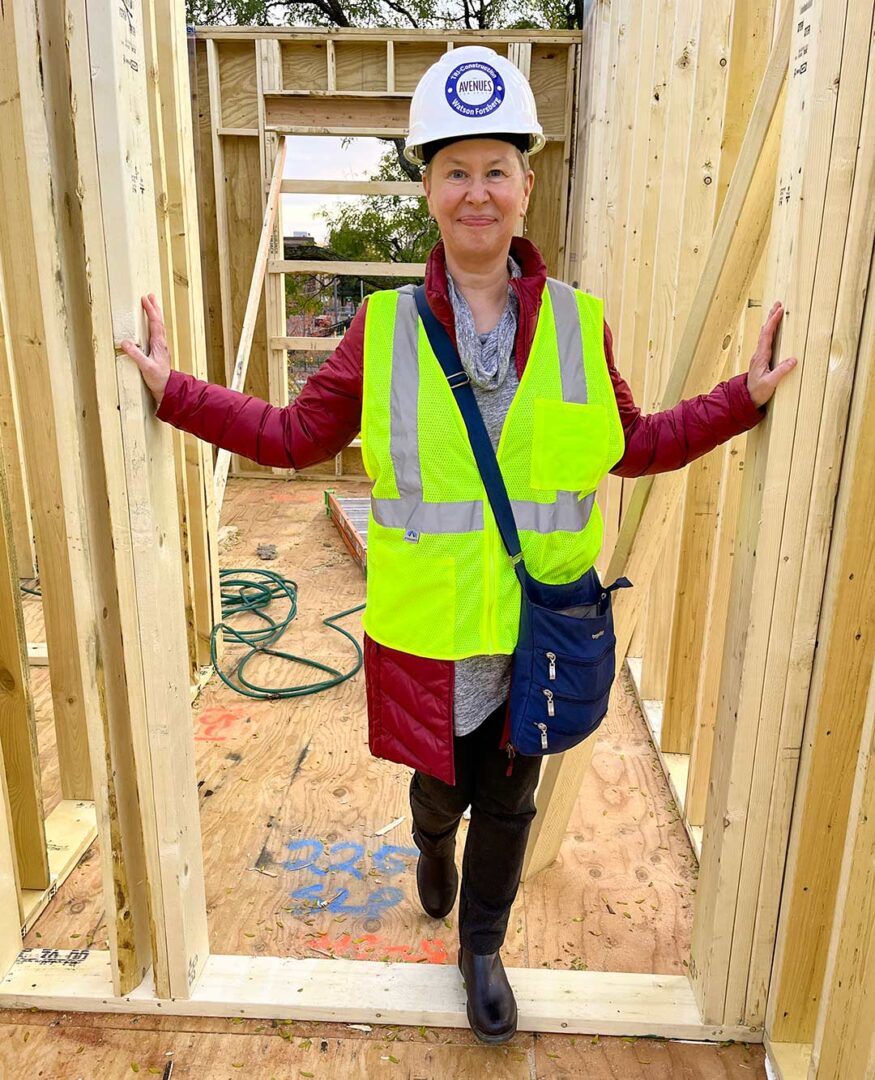
On any given night, homeless youth are turned away due to a lack of space, something Meerse says was a key reason for the expansion. The new shelter at 1401 N. 8th Ave. is estimated to cost $24 million, with $863,110 still needed in donations to meet their campaign goal.
Meerse says the expansion, inspired by Avenues’ Brooklyn Park location, aims to further their support for LGBTQ+ youth experiencing homelessness by moving toward trauma-informed design.
According to Meerse, each location holds a 30-day shelter program, yet only 15% of youth can resolve their situation in that time period. Many youth who are unable to be reunified with their families or are ineligible for benefits that could assist with rent move to Avenue’s 18-month transitional living program.
Between 30-40% of the 300-plus youth Avenues supports each year identify as LGBTQ+, Meerse says. The Brooklyn Park location has two elements that Minneapolis lacks: single bedrooms and gender neutral bathrooms.
“We see that youth tend to stay longer in Brooklyn Park, and that they are more likely to move into stable housing after they leave us,” Meerse says.
After data collection, done on behalf of Meerse and Avenues, they found that though the two buildings’ demographics, programming, and staff were virtually the same, which Meerse says pointed to the vitality of the built environment and the difference that inclusivity and personability make.
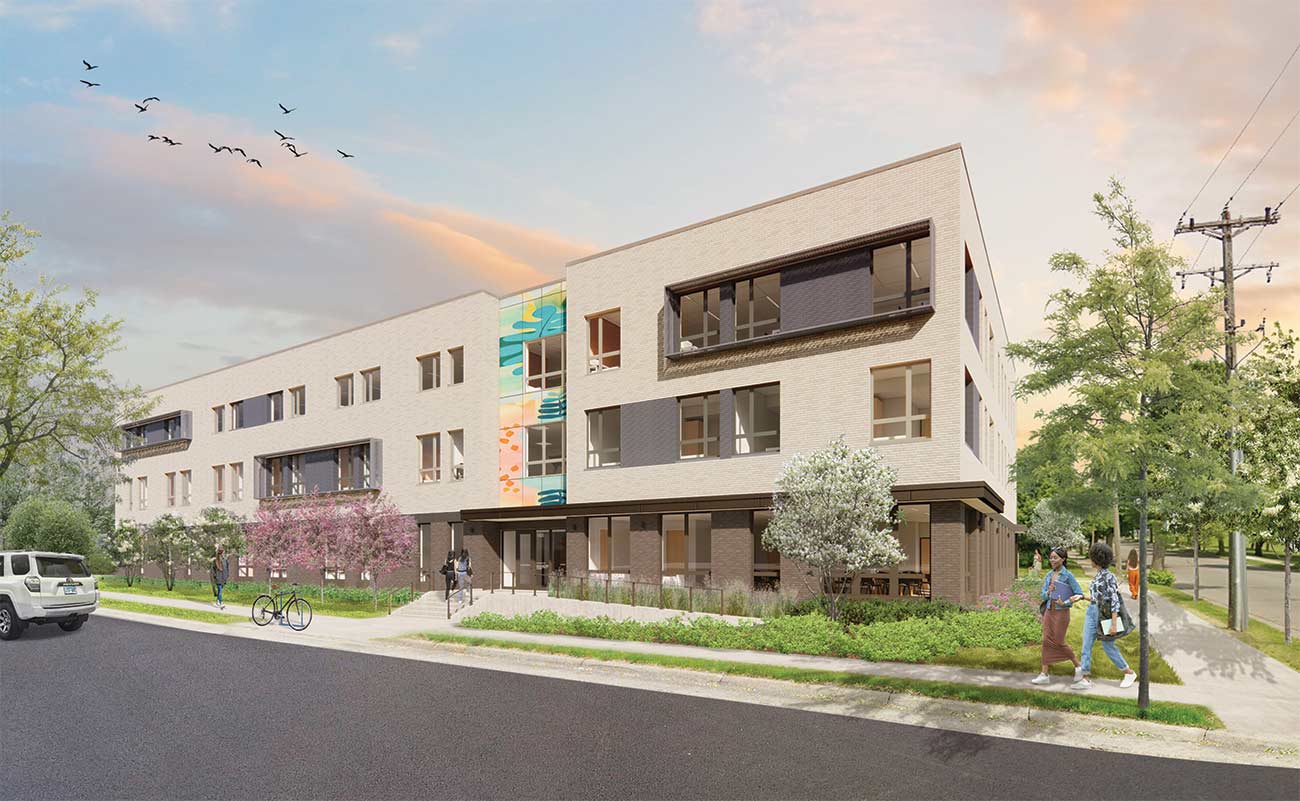
Not only will the new building provide space to serve nearly 200 more youth annually, but it will also include a community room, a spacious entry lobby that holds administration in the same building as the youth they serve, and more emergency shelter beds and individual rooms.
Meerse says Avenues will also include affordable apartment spaces for those who are 18 and older, allowing them to build rental history, with youth being able to furnish their own spaces and pay for rent at an affordable price, increasing their chance of approval down the line.
As for the design process itself, architecture and engineering firm LHB conducted a series of design meetings with staff and youth, bringing in pictures of specific spaces and asking what they did, or didn’t like.
“They would do it first with the youth and then with the staff,” Meerse says. “And when the staff and youth disagreed, unless it was a safety issue, we told them to do what the youth said.”
As for the soon-to-be old Minneapolis shelter, it is owned by the Minneapolis Public Housing Authority, which rents it out to Avenues for $1 a year. Meerse says that no decision has been made on what will become of the building in the future.
Two things can be true at the same time. Our homeless and LGBTQ+ youth can be struggling and in need of security, safety, support and community, while we celebrate the expansion of a new chapter for them that comes in the form of a space. A space that affirms, grows with them, and celebrates who they are and who they want to become.
To donate to help support Avenues For Youth now and into the future as they expand at their new space, go to avenuesforyouth.org/ways-to-give/.



5200 Willson Road, Suite 316 • Edina, MN 55424
©2026 Lavender Media, Inc.
PICKUP AT ONE OF OUR DISTRIBUTION SITES IS LIMITED TO ONE COPY PER PERSON