


The Ache of Unspoken Love: Samah Meghjee’s Bold Debut
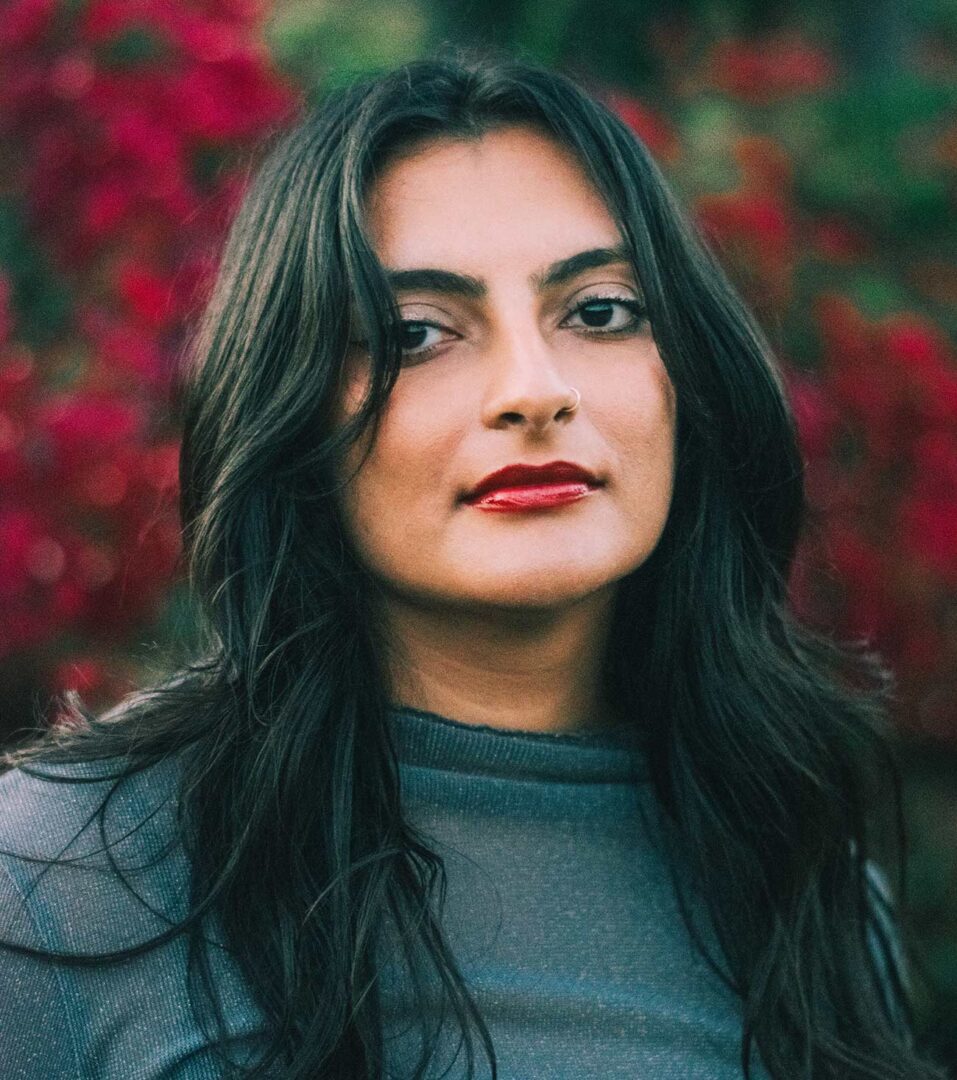
Two women have been friends for years, their lives intertwined by family, faith and familiarity. Yet, beneath the surface lingers a question neither of them dares to say out loud: what if this is more than friendship?
That unspoken tension drives “Maybe You Could Love Me,” the new work by playwright Samah Meghjee presented by Theater Mu, debuting September 13-28 at Mixed Blood Theatre in Minneapolis. Equal parts tender, funny and heart-wrenching, the play explores the complicated dynamics of the two heroines.
“The show is about two young Muslim women who have been friends for years, but are always on the cusp of something more,” Meghjee explains. “They are struggling and grappling with that love and tension for each other in a world that doesn’t accept that.”
The story grew out of Meghjee’s journey. She grew up in Florida in a conservative Muslim community, wearing hijab and adhering to the rules of her faith. When she went to college, her beliefs started changing. A visit home during her senior year sparked the moment that would eventually inspire her play. Reconnecting with an old friend, she nervously admitted she had a boyfriend, only to learn her peers back home had long been experimenting with sex, alcohol and marijuana.
“I was like, ‘Why didn’t you tell me?’ And she said, ‘You were a snitch,’” Meghjee says with a laugh.
That same night, she came out as bisexual. The dismissive response she received highlighted the complicated intersections of faith, identity and belonging.
Those contradictions now form the emotional landscape of “Maybe You Could Love Me.” One friend stays rooted in their community, while the other leaves and later returns, forcing them to confront how they’ve grown and how their relationship has changed.
Bringing the play to life has been a dream, Meghjee says, thanks in large part to Theater Mu. Her script was first selected for the company’s New Eyes Festival last year, one of only two chosen out of roughly 80 submissions. Director Katie Bradley approached the reading with care and sensitivity, later returning to helm the full production with the same attention to nuance.
For Meghjee, it was crucial that the play not be misinterpreted as an attack on Islam.
“I don’t think Islam, fundamentally, believes that gay people shouldn’t exist,” she says. “That’s a cultural issue, a patriarchal issue; colonialism influencing specific values on certain immigrant communities.”
With the help of cultural consultants and actors who understand the complexity of the world onstage, Meghjee has created space for nuance: a story that acknowledges pain without villainizing faith.
Though “Maybe You Could Love Me” deals with themes of heartbreak and cultural constraint, it’s far from dour. Meghjee describes the piece as a dramedy, one that mirrors the unpredictability of real life.
“It’s really funny,” she insists. “I try to infuse even a tragic love story with as much humor as possible. The two actors are incredible, their chemistry is off the charts and they’ll make you pee yourself laughing.”
That blend of levity and longing makes the story all the more relatable.
“Very few people are going to be able to relate to the play, identically,” Meghjee says, “but their relationship leads to this universal experience that we’ve all had: falling in love with someone that you can’t have for whatever logistical or emotional reason.”
The Twin Cities, with its vibrant theater scene and multicultural communities, feels to Meghjee like the perfect launchpad.
“The theater community here is unbelievable, and people really care about live art and seeing a play, which I think is really hard to find,” she says. “Theater Mu is so fantastic, approaching theater-making with Asian voices first, and expanding that in the past couple of years to South Asian voices — and seeing that as an expansion, not a deviation — is really beautiful.”
With “Maybe You Could Love Me,” Meghjee is staking a claim for stories that are both unapologetically queer and Muslim. In doing so, the play invites audiences to care deeply for lives that may look different from their own, yet echo their most familiar emotions. As she puts it, “even if you don’t totally know these people inside and out, you still can feel their feelings. And you have an abundance of empathy for them.”





5200 Willson Road, Suite 316 • Edina, MN 55424
©2026 Lavender Media, Inc.
PICKUP AT ONE OF OUR DISTRIBUTION SITES IS LIMITED TO ONE COPY PER PERSON