



Scintillating Sicily

“Hold this for me,” instructs Laura, our tour guide in Palermo — the final stop in Road Scholar’s “Treasures of Sicily” adventure — as we gather to explore the city’s beyond-beautiful Palatine Chapel of the Norman Kings.
“I’m Italian,” she explains. “I need my hands to talk.”
Inside that magnificent 1100 C.E. structure, as she goes on to explain, all that glitters is, indeed, gold, starting with the mosaic tiles portraying Jesus Pancreator, boss of the world. The visit is the pinnacle of our two-week expedition, which began in Taormina. As our plane prepared to land there, we peered out the window at the region’s iconic landmark, Mount Etna. She’s been lavishly spewing lava since 700 B.C.E., and we’ll hike her craters tomorrow. Tonight, though, I’m swanning down Taormina’s elite main drag, which makes Rodeo Drive look shabby, as the town’s film festival gets underway. (Michael Douglas just walked by.)
Taormina’s no stranger to such dramatic enticements. Its open-air Greek Theater, which we’re to explore, has entertained the masses since 300 B.C.E. In comparison, Winery Murgo, our lunch stop, is a mere upstart, launched in 1863. But now, just before dinner, as part of Road Scholar’s learning mission, we gather for an expert’s lecture, such as tonight’s deep dive into the island’s cultural traditions.
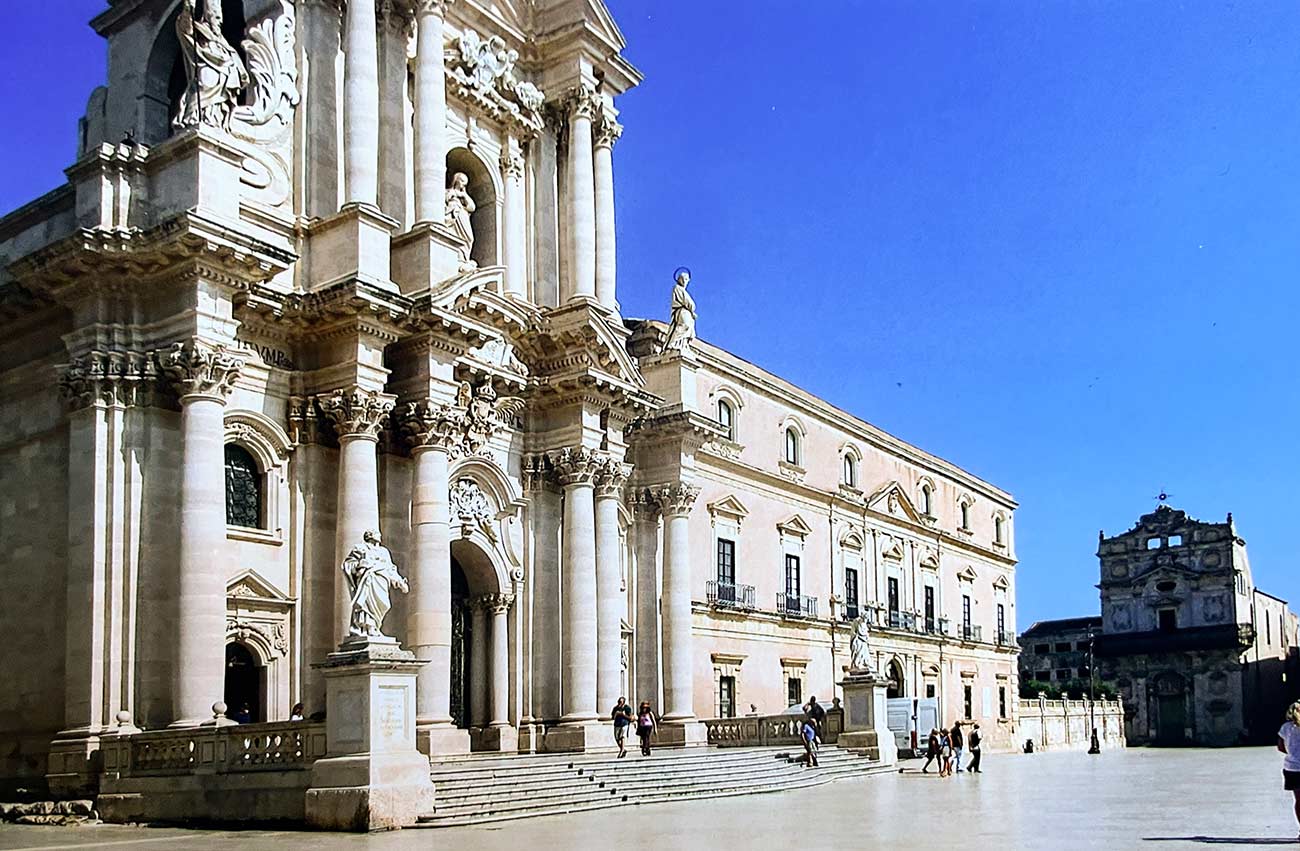
Then it’s on to Siracusa, where our hotel anchors a harborside promenade leading to the Duomo — Cathedral — of 1693, outfitted in repurposed Roman pillars and skirted by a gracious piazza which serves as the town’s living room. As I devour spaghetti carbonara at a sidewalk café on its hem, I watch an impromptu tango performance (stiletto heels and all), leaving the spirited dancers a couple of euros in the tip jar.
St. Lucia — the city’s martyred patron — holds place of honor in a tiny, 10th-century church alongside the piazza, where several of her bone fragments reward the faithful. We then make our way to a stretch where Mussolini’s fascist façades dominate the streetscape; close by, ruins of the Temple of Apollo provide better eye candy. To add another intriguing perspective, we clamber into a motorboat for a waterside tour of the harbor, which we toast in sparkling vino, courtesy of the skiff’s captain.
Siracusa’s mesmerizing Archaeological Zone beckons after breakfast, leading off with a vast Greek theater and the parklike Paradise Quarry (no paradise for the slave workers who regularly perished there) and the echoing Cave of Dionysius. For drama of a different nature — but equally beloved by Siracusans — we popped into the town’s marionette theater for a performance (Spoiler alert: the knight wins the lady).

During free time, a couple of us ventured into working-man’s Siracusa, where a painting by Caravaggio holds pride of place in yet another church dedicated to St. Lucia. Outside, a sprawling Sunday market bustles, offering everything from eats to tchotchkes.
Heading back, I happen upon Galleria Regionale, housing precious Siracusan artworks from 1500 to today, housed in a jewel of a palazzo.
And tomorrow, a jewel unhinged from its former crown. We hop on our bus for a 50-kilometer spin to visit the tiny mountain town of Buscemi, a “living museum” — that’s the spin they put on a dying village, inhabited these days by aging elders, whose progeny have fled in search of better opportunities.

We stroll back in time along its main street, stopping for coffee with its (very) senior citizens, peering into a former mill and carpenter’s shop; a winery with dusty grape press; a butcher shop, where we’re treated to samples of boar sausage; and a one-room cottage, proudly kept squeaky-clean by a geriatric couple sporting smiles that reveal more gaps than molars. They plant moist kisses on our cheeks.
On to the more bustling town of Piazza Armerina and the enticing Villa Romana, which arose there in 300 C.E. After a 12th-century mudslide, it lay undiscovered until a hundred years ago. The remarkable remains of this sprawling, 40-room villa, built for a show-offy Roman potentate, contain multiple public baths (choose warm, temperate or cool), and public reception rooms flaunting intricate mosaics starring wild animals, hunters and bikini-clad young ladies tossing a frisbee around.
The next day’s destination, Agrigento, earns its fame via a visit to a spectacular archaeological museum boasting statues galore, climaxing in a white marble figure of a handsome youth rising 30 feet into the air — the star of this precious collection. Driving back, we survey a timeless summer landscape of wheat fields, olive trees and almond groves and patriarchal palms.
Agrigento seduces tourists with its vast network of Grecian temples, too — silhouettes backed by a deep blue sky since the 600 B.C.E. — serene, grandly-pillared structures even older than yesterday’s cache. But this visit goes beyond show-and-tell: We’re urged to scramble up and touch. At sunset — when shadows begin to temper the blistering, 90-degree heat — we’re the sole wanderers in this romantic foray into the long-distant past.
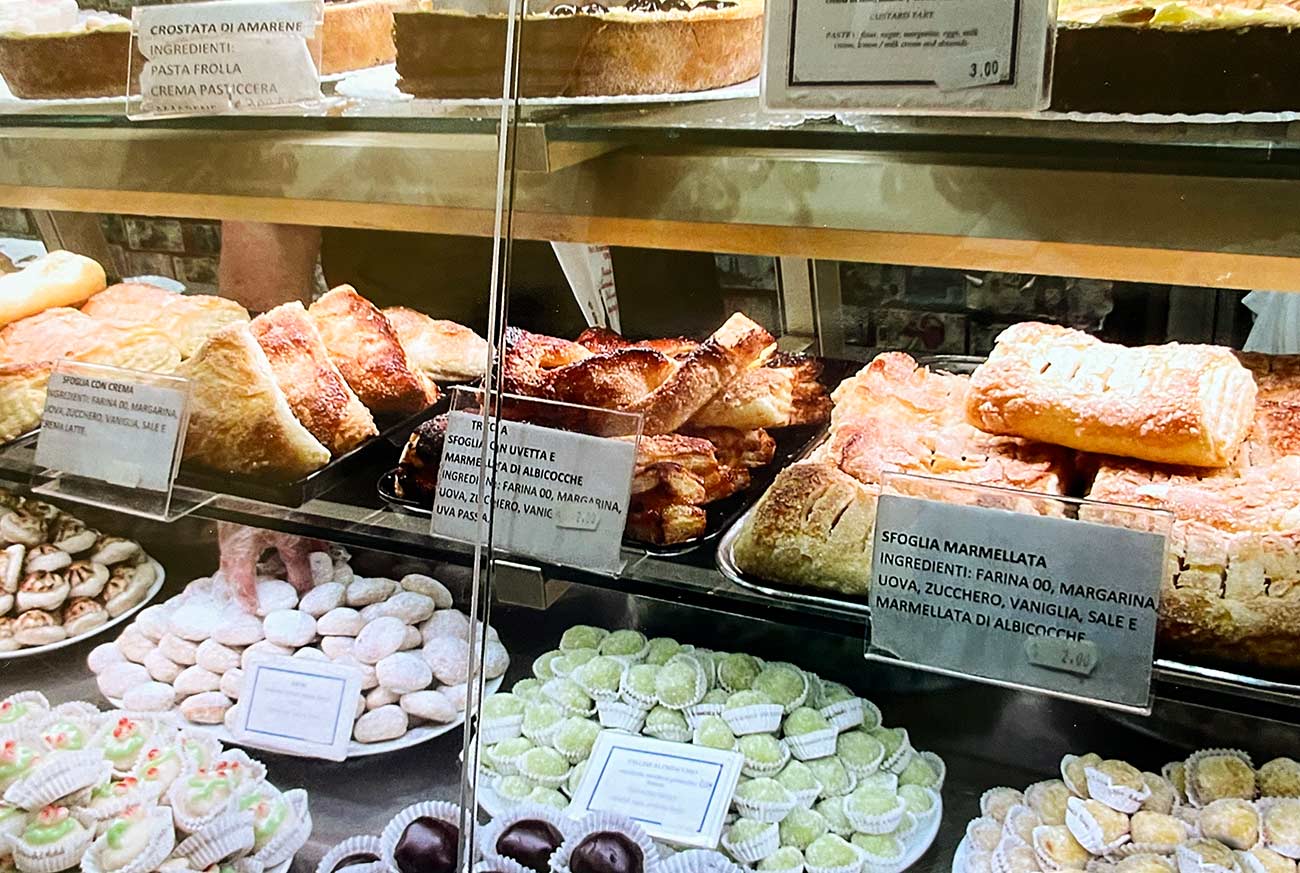
After a dinner of caprese salad, pasta with fish ragu and lemon gelato, we’re ready to head off after dawn to Palermo, Sicily’s splendid-to-seedy capital and, back in the day, HQ of the (no longer mighty) Mafia. Creative graffiti emblazons many a walkway near our hotel, just off the main drag, where I head to watch the city’s creatively-costumed LGBTQ+ crowd on their way to a demo.

By morning, we’re ready to follow our feisty guide, Laura, as she takes on Palermo’s traffic. “Just try to kill me, I dare you!” she threatens motorists while we make our way from one ornate Baroque façade to the next. At the Palatine Chapel of the Norman Kings — the architectural gem of the city — the wow! factor kicks in as we gasp at the glistening floor-to-ceiling Biblical murals installed by Muslims for their Norman boss. Then on to an Oratorio chapel, lush with overweight cherubs blowing bubbles on its walls as the Virgin makes her way to heaven. Fully dazzled, we head off for a relaxing pizza night (the first of the trip!).
After the usual lavish deli spread (and endless cappuccinos) that serves as our daily breakfast, we make our way to Palermo’s open-air market to survey everything from Seuss-like sea critters to pyramids of lemons and almonds straight from neighboring groves.
Then (how did the days fly by so fast?) it’s time for our final dinner: lots of laughs, hugs and promises to keep in touch. Suitcases are set out for a 3 a.m. dash for the airport and back to reality. We bid a fond arrivederci to Sicily — uber-rich in history, overloaded with beauty and lush with dives into local life — but the experience will live on in our hearts.
For information, contact roadscholar.org. Life is short, so make the most of it!




5200 Willson Road, Suite 316 • Edina, MN 55424
©2026 Lavender Media, Inc.
PICKUP AT ONE OF OUR DISTRIBUTION SITES IS LIMITED TO ONE COPY PER PERSON