



‘Prove the Improve’
Minneapolis’s Whittier Neighborhood Just Keeps Getting Better and Better
The land has seemingly improved the people who have lived there from the beginning … from the very, very beginning, as it turns out.
The first denizens of the area were, according to archaeologists, Paleo-Indians. They asserted themselves when the final ice age began to de-ice, the retreating glaciers taking their parting shots at the gasping land, leaving cosmic fist prints that 10,000 years later would give the region its name.
The newly-forming forest forced those proto-Minnesotans to improve by forming community: when living in a world populated by wild beasts with a hungry hankerin’ for bipedal prey, the slower, weaker, smarter beings with the folded brains and opposable thumbs knew they’d have to collect their efforts at survival or end up as water buffalo palate cleanser.
Over the course of the subsequent 10 millennia, give or take a century, other people would come to the improving land and learn that era’s version of the same lesson. Some were improved and moved on … but still others were improved and stayed.
Just north of this land, two cities formed. Although they would be called twins, the sorry truth is they would take disparate forms that could scarcely be more different. Finally, in the year 1849, a 21-year-old entrepreneur, John T. Blaisdell, squatted within the throbbing heart of the improving land. Eventually, among many other endeavors, young Master Blaisdell, along with two brothers, built the first space where the land’s improvement might be more formalized: the Blaisdell School.
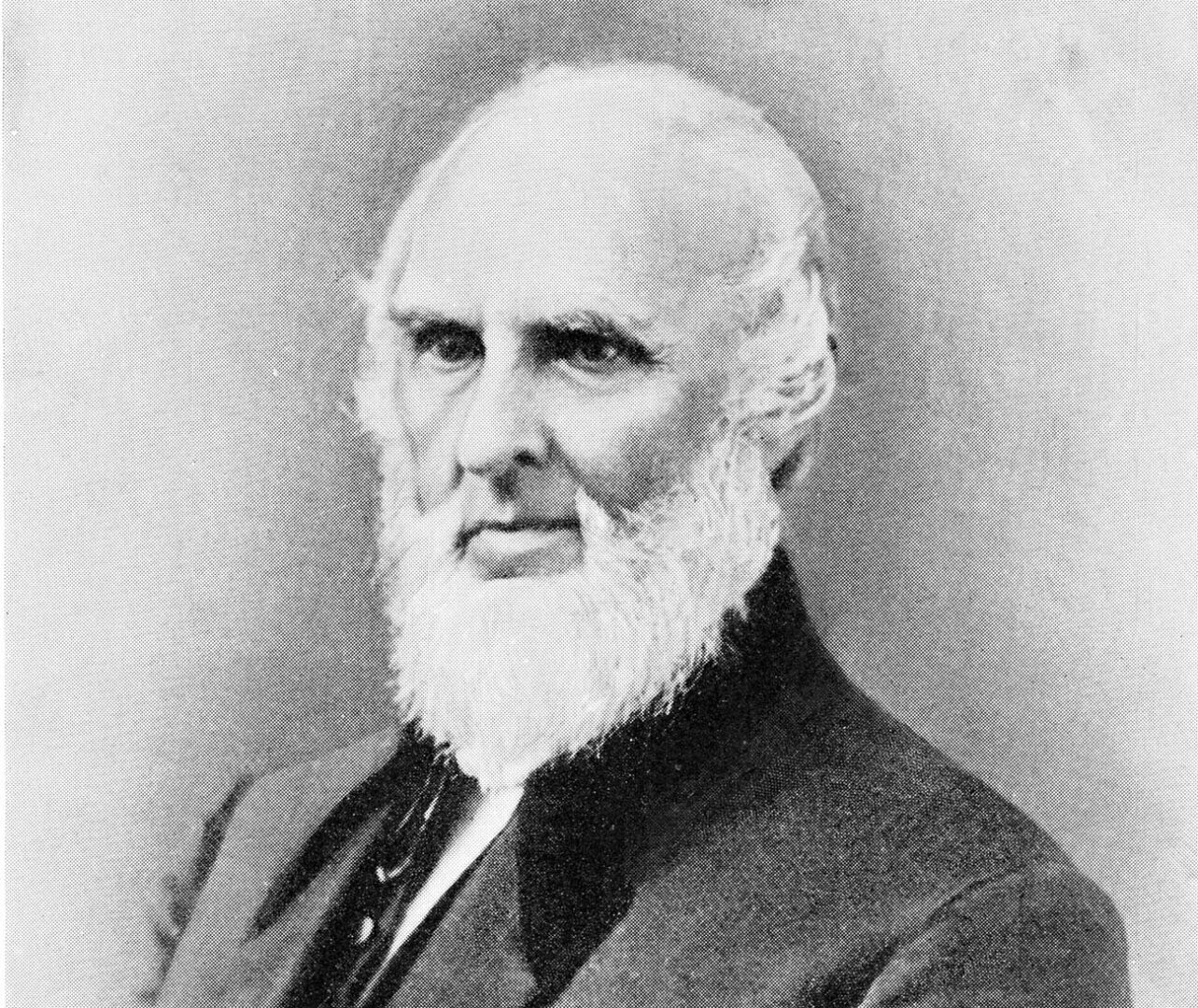
For decades, the Blaisdell School did pretty much what you’d expect, until in 1883, when Hennepin County took over its improving duties. Before turning it over to the government, John T. Blaisdell himself re-branded the institution. Adhering to late-19th-century tradition, he named the new version of the school after a popular contemporary poet, John Greenleaf Whittier. Also adhering to late-19th-century tradition, and perhaps somewhat evoking the community spirit of the Paleo-Indians, the surrounding blocks of houses absorbed the re-name of the re-named school.
And in this way, Minneapolis’s Whittier Neighborhood was born.
Despite the new name, the improvement that had defined the area endured: just north of Whittier, Minneapolis’s elite used the Mississippi River to transport the land’s grand, ground bounty, flour, from Minnesota to the rest of the world. Families made rich by this process, like the Pillsburys and the Turnblads, turned some of that fabulous improvement into oversized Whittier Neighborhood cribs.
Such Bruce Wayne-esque structures still stand today, these days housing history more often than people. These include the Charles J. Martin House, the Fair Oaks Mansion, the Snyder Mansion, the Turnblad Mansion and the Van Dusen Mansion, collectively embodying the fancy styles of the time — Brownstone, Foursquare, Italianate, Renaissance Revival and Victorian. Some of these dwellings have been repurposed as museums or as social spaces, but all remain like the giants of a bygone era who refuse to be gone.
Happily, one of the most obvious improvements that Whittier supplies is Eat Street. The 1997 brainchild of the Whittier Alliance, Eat Street is a 17-block length of Nicollet Avenue deliberately dominated by diners and dives, cafés and coffee houses, offering multi-ethnic restaurant options that would put to shame most grocery store Global Food aisles. The cornucopia climaxes at Eat Street Crossing, which features American, Asian and Latin cuisines.
And best of all, in contrast with the ice age proto-Minnesotans, modern denizens and visitors don’t have to catch and fight their own meals.
Mental and emotional improvement options are easy to find in the contemporary Whittier Neighborhood. The Minneapolis Institute of Art, Minnesota’s largest art museum, features 100,000 bits o’ perpetually-rotating inspiration that traverse 50 centuries and touch six continents. And while basic ecology teaches us there’s no such thing as a free lunch, there is such a thing as free admission, which can be constantly found at Mia, barring “special exhibitions and selective events,” according to its website.
Just next door is the Children’s Theatre Company, which has improved the lives of performance-loving rugrats since 1965. CTC is the largest kid-oriented theater in the United States. This is mostly because it operates two stages, one that accommodates 300 audience members and a second that accommodates 747.
That’s a lot of accommodation.
Finally, on the same campus, there’s another opportunity for modern improvement: the Minneapolis College of Art and Design, a private college that specializes in teaching visual arts, can focus any student’s artistic prowess, no matter where their starting point is. MCAD is only one of a handful of such North American institutions that offer a degree in comic art.
Of course, MCAD is only one of several specialized schools that have sprouted up within the Whittier Neighborhood in the last few decades. The City of Lakes Waldorf School and Watershed High School share occupancy within the Hardware Mutual Insurance Company, and the Minneapolis Japanese School asserts itself not far away.
These institutions extend this land’s legacy of improvement through community: the neighborhood improves the people who currently live there by making smart people smarter and making witty people Whittier.




5200 Willson Road, Suite 316 • Edina, MN 55424
©2026 Lavender Media, Inc.
PICKUP AT ONE OF OUR DISTRIBUTION SITES IS LIMITED TO ONE COPY PER PERSON