


Our Rides: Seen Without a Glass
Our community has always been seen as different from everyone else. Practically everything we do reflects that point of view. While we sometimes want to conform, we always find something that distinguishes us from the norm.
Regardless of your worldview, there is always something that will stop you in your tracks. Something that is indeed different from anything we define as normal. That is why we always have an eye on design and how our psyche reacts to it.
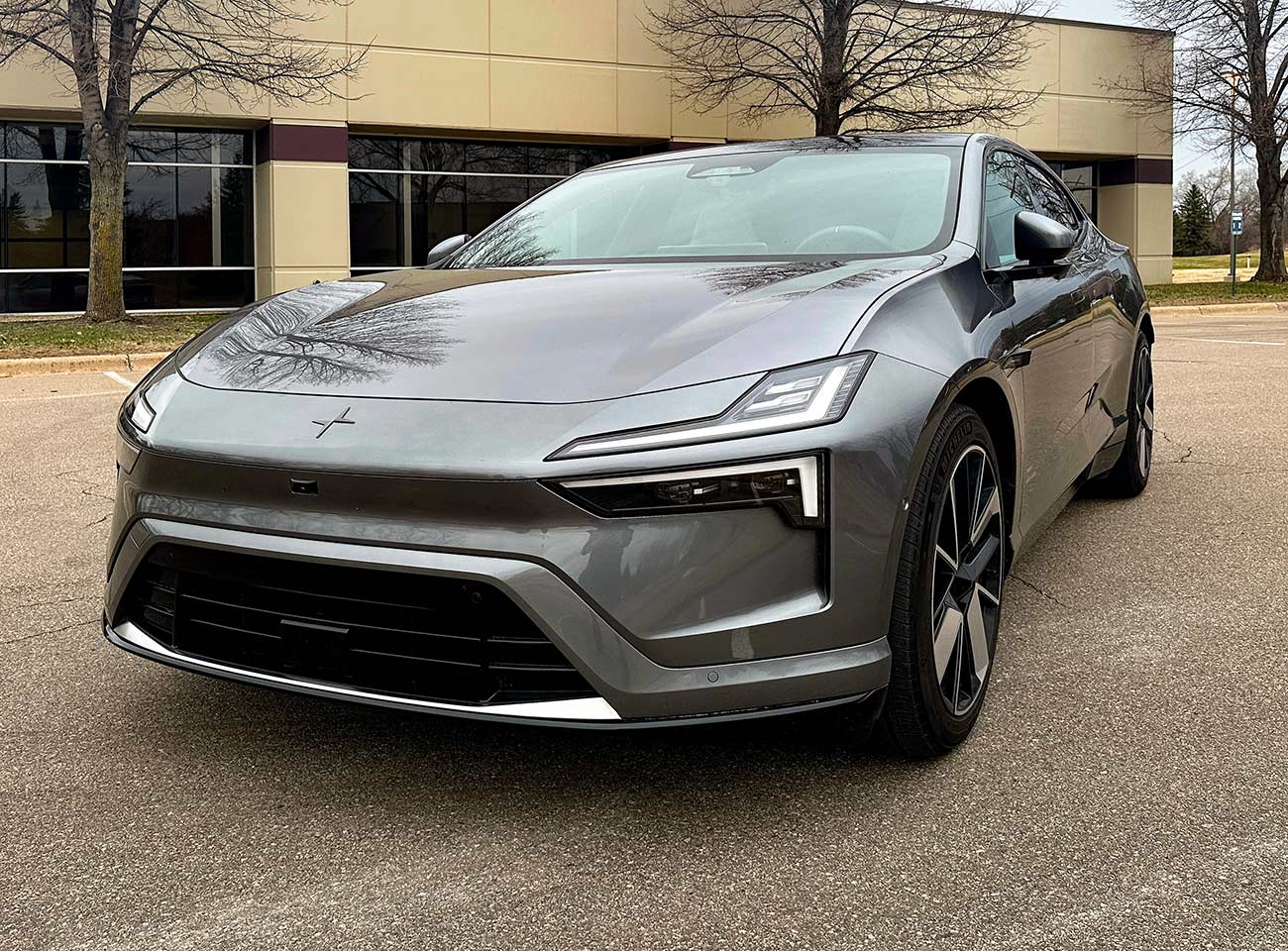
One look at the 2026 Polestar 4, and you begin to question everything. It is certainly unlike anything we have driven in this country — a design study on what a sporty electric hatchback could be if someone let their imagination run wild.
It is a curious vehicle. The 2026 Polestar 4 provokes a lot of curiosity towards defining itself. There are a few clues as its design inspiration. However, it is not what it truly seems to be.
Let’s back up for a moment. Polestar is a sibling to Volvo, all controlled by Chinese automaker Geely. From what we experienced so far, Polestar is further differentiating itself from its Swedish relative by offering premium-level sporty electric vehicles. While there are some shared design and engineering tenets, Polestar vehicles were developed to challenge the norm. They must be different and distinctive to attract the kind of owner who appreciates that blend of modern aesthetics with the latest technology.
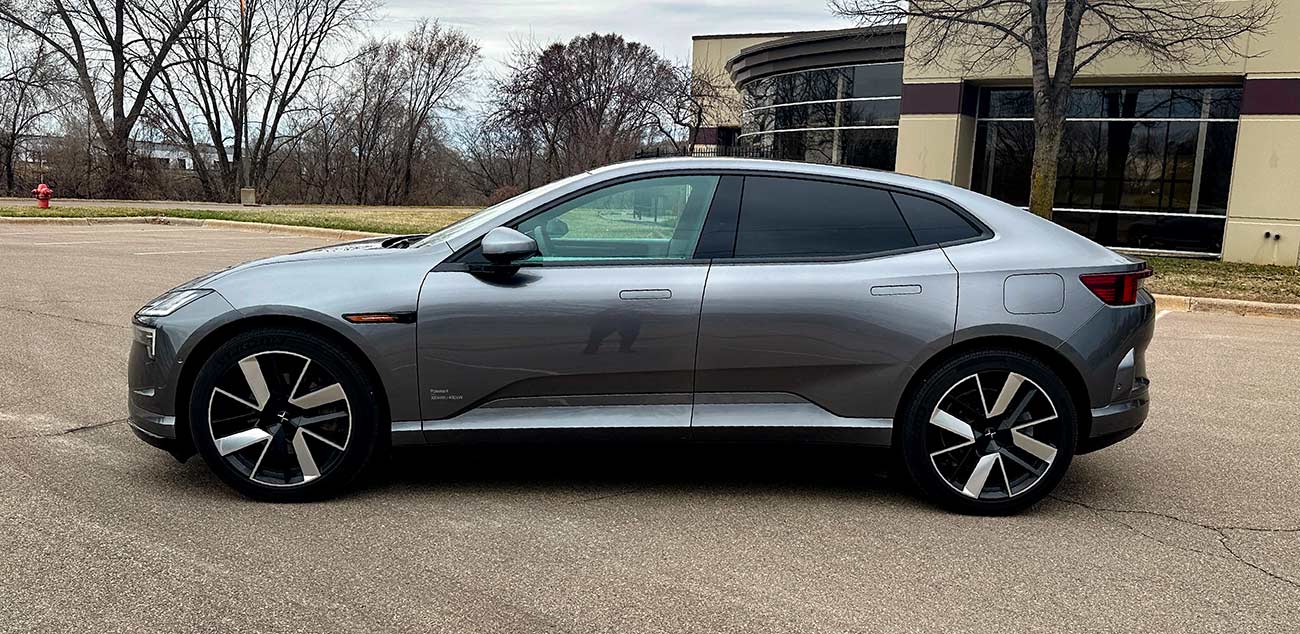
Being the fourth offering from this brand, the 2026 Polestar 4 broke from many design molds. The only thing “Volvo” about this sleek four-door touring hatchback is the Thor Hammer LED front lighting units. Even those have been shaped differently than before, now split into two units per side. The nose is clean with the grille in the lower area of the fascia. The rest of the body forms a coupe-like shape for the roofline that meets the horizontal LED taillight strip.
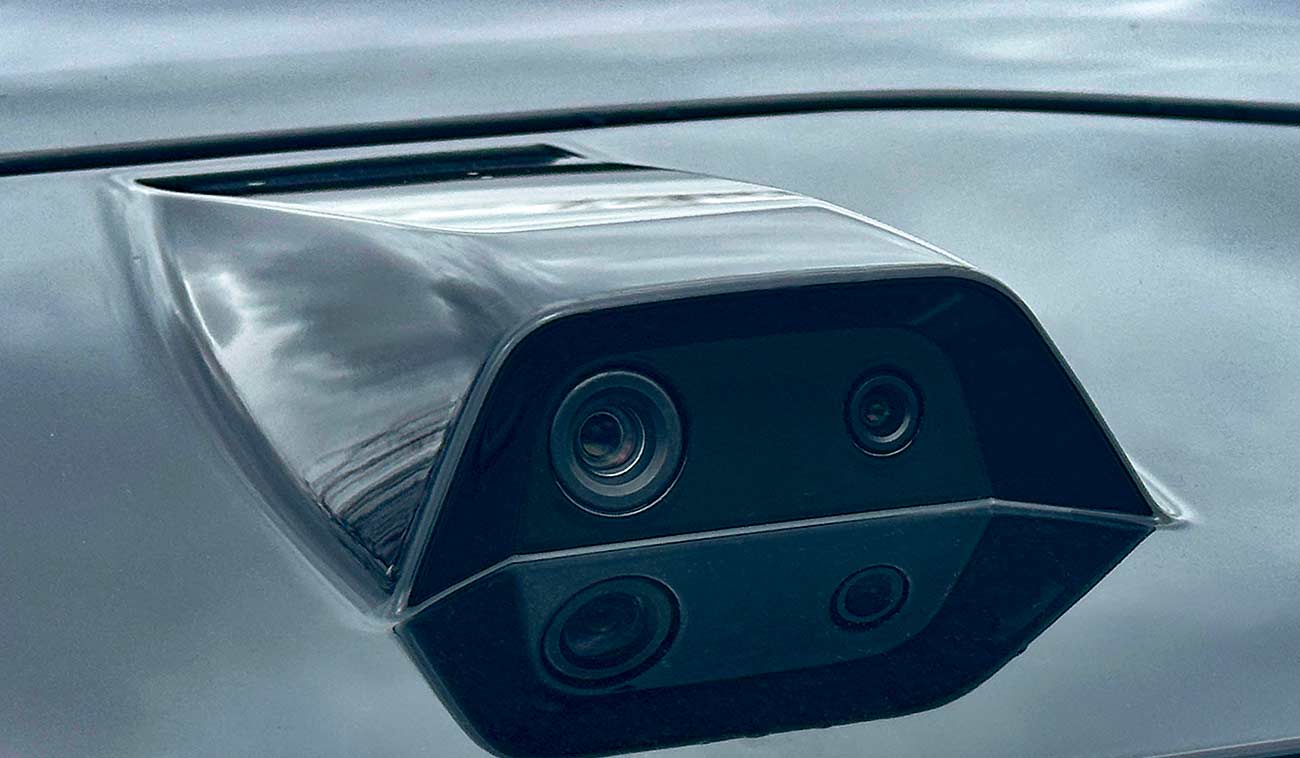
Just above the taillight unit, something is missing. There is no traditional back glass on the liftgate. This has been a topic of conversation among consumers and fellow media members that certainly caused a lot of head scratching and unfinished questions.
How does one look back? There is a camera unit where the glass pane should be located. That feeds back to two areas — the 8.9-inch rearview mirror and the 15.4-inch center touchscreen display. The rearview mirror acts as the primary screen to look behind you. The resolution was fine, and you can adjust for height, position and brightness on the mirror unit itself. Just follow the prompts and select the buttons appropriately.
You do get side mirrors that are small and frameless. The entire unit adjusts through prompts on the center display screen. They also dip when you put the 2026 Polestar 4 in reverse. While in reverse, the center screen gives you both an immediate reverse view and a 360-degree overhead view. Both views are clear with great resolution.
Would the absence of a rear glass change the ambience of the cabin? First, there is a fixed electrochromic glass roof panel that adjusts to allow light inside. Our test vehicle wore Zinc Bridge of Weir Nappa leather seats that also lightened the cabin’s atmosphere. However, there are still plenty of Charcoal finishes that may cause some effects from the absence of a rear pane of glass.
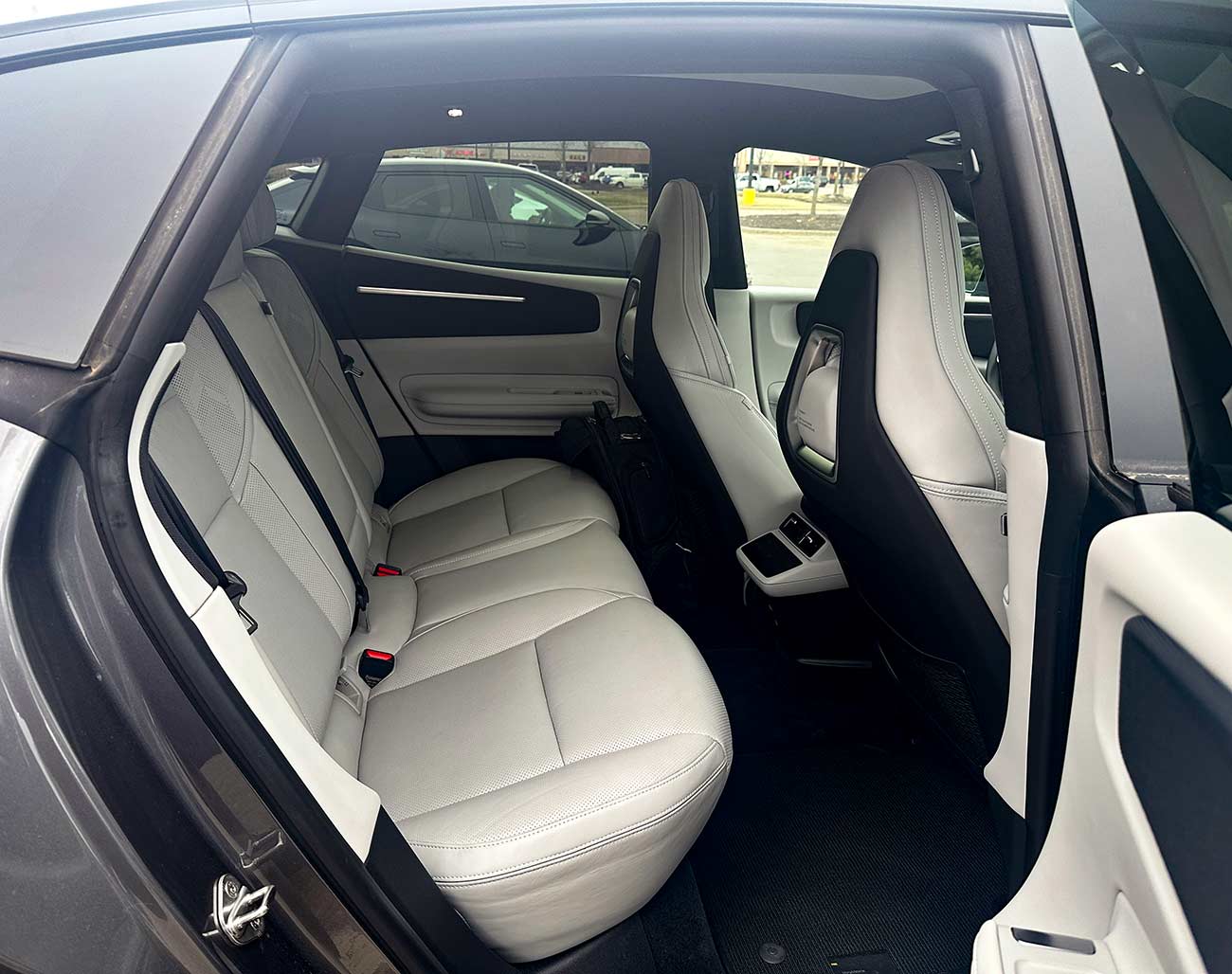
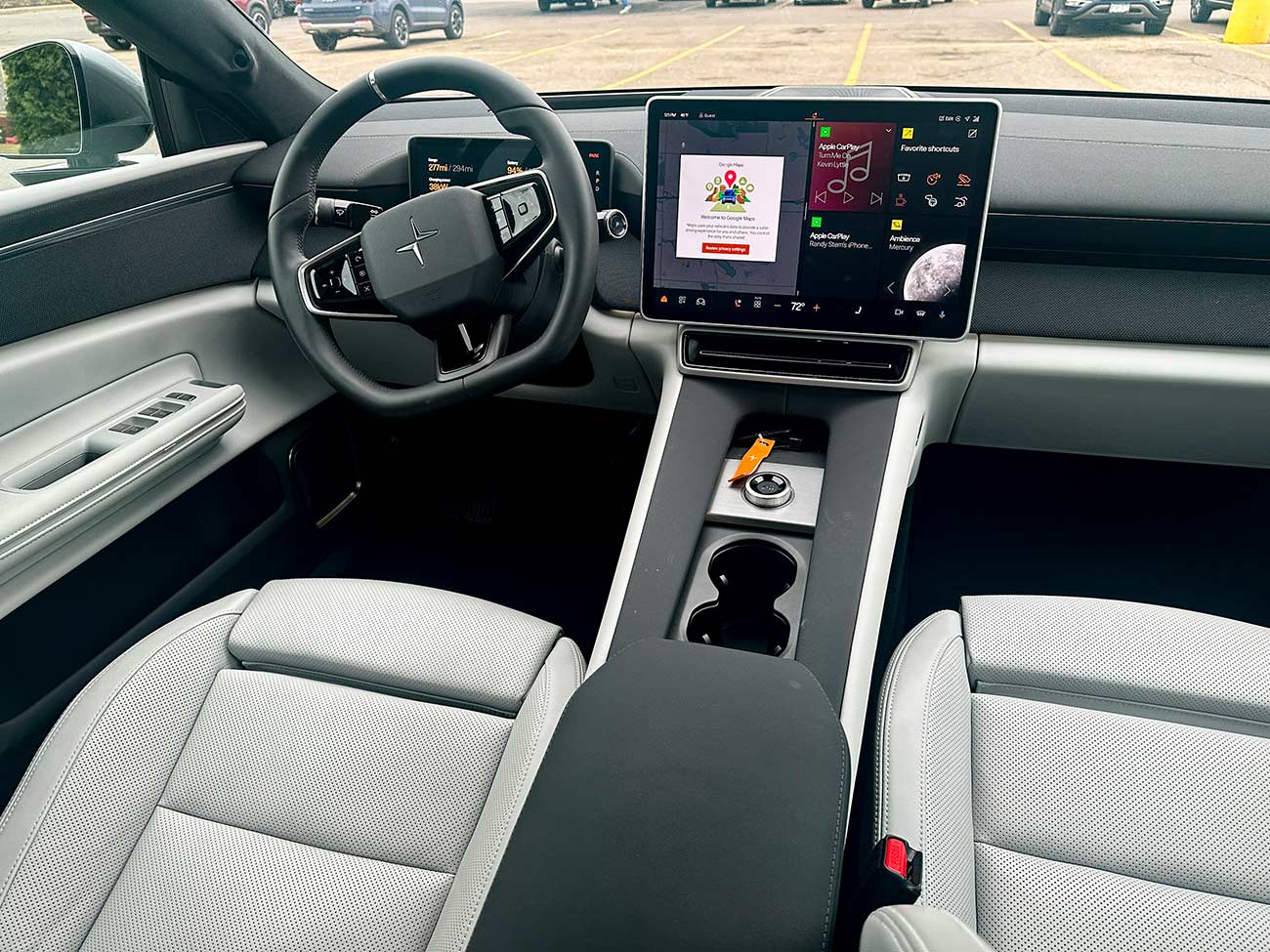
The driver is treated to a 10.2-inch display behind the steering wheel, along with a 14.7-inch head-up display. The graphics and readouts are very clear and easy to decipher. Most of the vehicle’s controls are in the center touchscreen display. The entire cabin has a clean and sleek look overall, capable of seating up to five people.
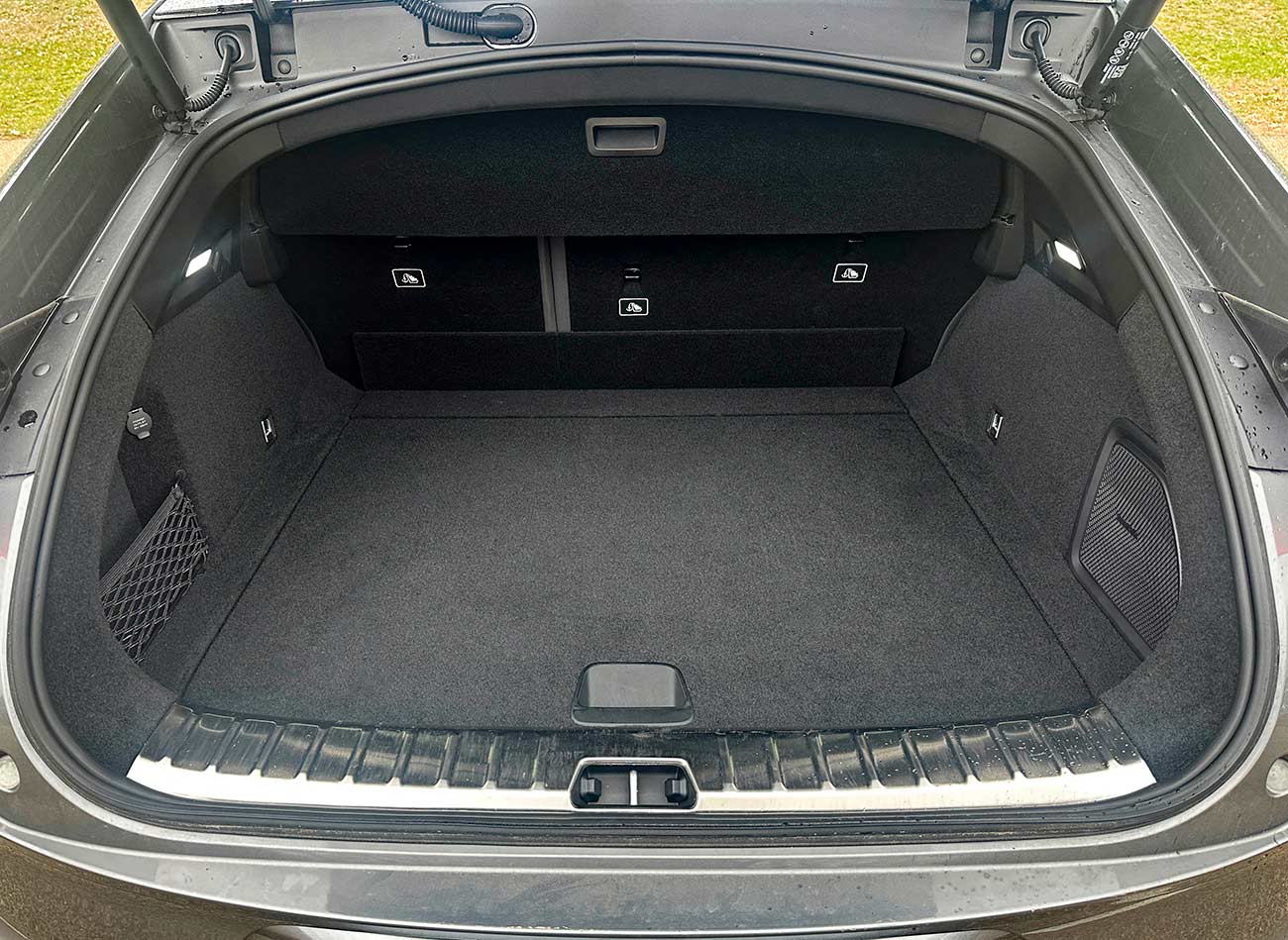
As a hatchback without a rear glass pane, there is plenty of cargo space available. With the rear seats up, there is 18.6 cubic feet. You can expand that space to 54.2 cubic feet. There is an additional 0.5 cubic feet underneath the front hood.
Our Long range Dual motor test vehicle has a driveline that consists of two electric motors mounted at each axle. Together, they are rated for 544 horsepower with 508 pound-feet of torque. Electric energy comes from a 100-kilowatt-hour battery that receives its energy from a CCS plug. At a DC Fast Charger, you can recoup from 10-80% state of charge in 30 minutes at a rate of 200-kilowatts. We found that we had nearly 300 miles of range at a full battery.
Our test vehicle came with a set of 21-inch four-spoke forged alloy wheels on low-profile tires. While they look great, they offer a solid but firm ride overall. They did their best to manage rougher road surfaces. In turn, the handling felt precise and near-flat through the corners. The 2026 Polestar 4 avoids maneuvers with reflexes.
That leads to the steering system, which we also found was precise and responsive. On-center was fine and can be adjusted by putting the 2026 Polestar 4 into Performance mode; the steering effort and feel will be weighed down.
Brake pedal feel was fine overall, with quick response to the wheels. One-pedal driving was enabled with Creep mode on, which slowed down the vehicle more quickly without much prompting. You can adjust the one-pedal driving, as well as turn off Creep mode.
With two drivelines and several packages to choose from, pricing for the 2026 Polestar 4 starts at $56,400. Our Long range Dual motor model with the Pilot and Plus Packs came with a sticker price of $79,100.
This fourth addition to Polestar’s lineup is a compelling vehicle. It is a sporty hatchback with some SUV and crossover elements that truly defy convention. Yet, it is a type of electric vehicle that we could see more of in the coming years, if not already in some parts of the world. If you dare to be different, try the 2026 Polestar 4 on for size. Just don’t mind the absence of the back glass. You’ll get used to that soon enough.






5200 Willson Road, Suite 316 • Edina, MN 55424
©2026 Lavender Media, Inc.
PICKUP AT ONE OF OUR DISTRIBUTION SITES IS LIMITED TO ONE COPY PER PERSON