


Mic Check: FairPlay and Queermunity Unite to Champion LGBTQ+ Artists in the Twin Cities and Each Other
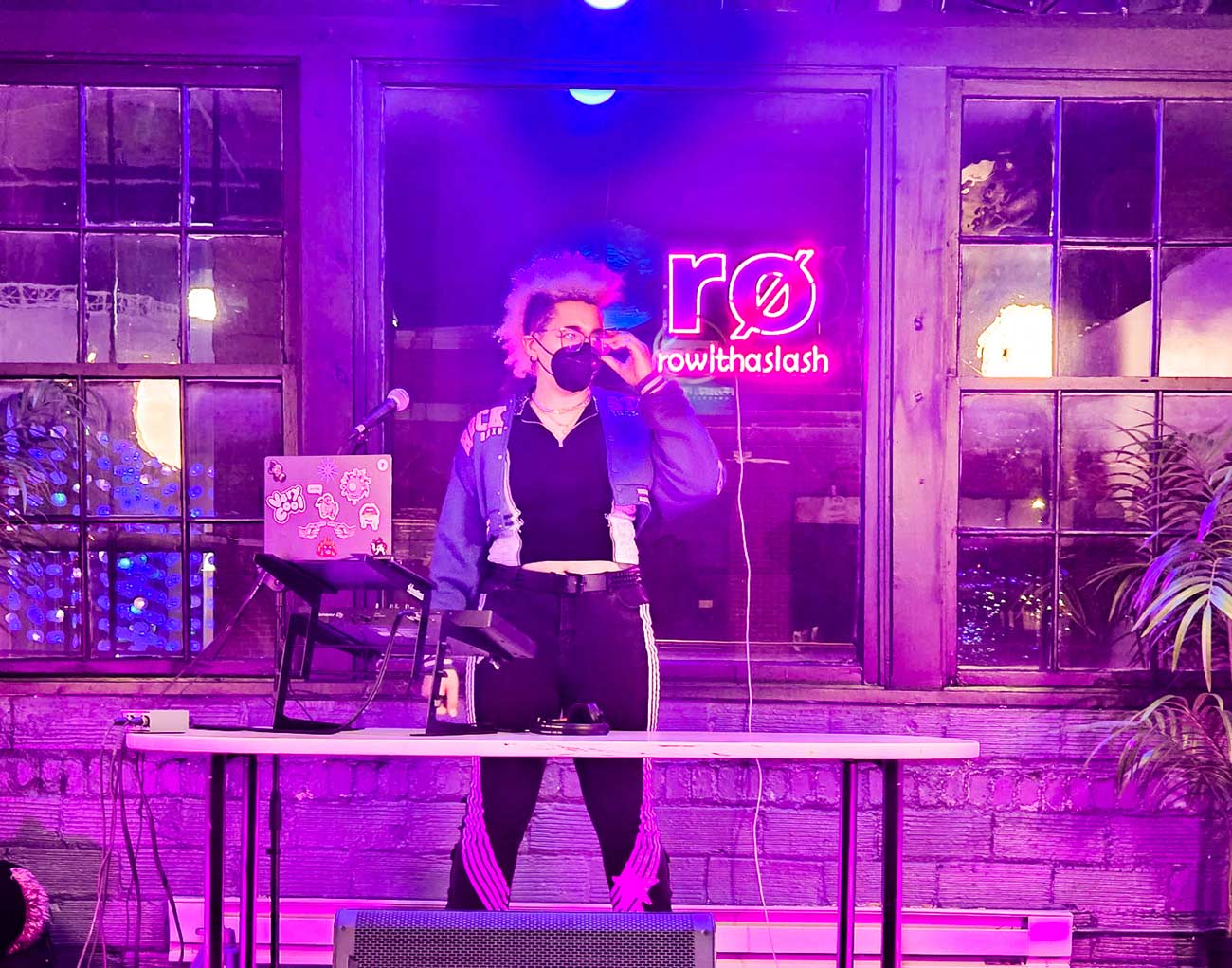
What started with an outreach email from Queermunity, asking “how can we help you,” sprouted into an idea reflecting the Twin Cities music scene: a rich crop of local talent composed of emerging queer, trans, and BIPOC artists. Yet embedded within both the music industry and the walls of our own city is an omnipresent, systemic barrier, one that consistently denies queer artists of color exposure and the resources to success.
When Minneapolis hip-hop artist Nur-D (Matt Allen) and producer and turntablist DJ Hayes (Ryan Hayes) first visited Queermunity, an event venue and gathering space for LGBTQ+ and BIPOC communities and their allies, they had no idea that their time in the space would spark something entirely new through their own creative vision.
Nur-D and DJ Hayes’ partnership, based on their passion for music and advocacy, started as a friendship. They first met at an “Get up and Vote” event, and eventually both became involved in the Marches for Justice in May 2020 following the murder of George Floyd.
“During that time, we were pretty much going from the streets to the studio, back to the street to the studio,” Nur-D says. “We were not getting much sleep, but we saw a vision for what we wanted the music industry to look like with community at the forefront.”
Four years later, they co-founded recording studio and artist collective FairPlay Entertainment with the intention of creating “fair play” where “everyone gets a shot.”
Though FairPlay started as an artist mentor program out of a closet that DJ Hayes’ dad helped transform into a recording studio, it now offers procuring services, event bookings, and coaching for LGBTQ+ and BIPOC artists locally, Nur-D says.
Young, emerging artists frequently stop in to have seasoned artists at FairPlay listen to their work, provide feedback and have conversations about their future in the industry, according to Nur-D. They have expanded their offerings even further after touring the Queermunity space.
Queermunity: Why continued support matters not just for music, but for us
Queermunity opened its doors on election day in 2024. Despite their own cause for celebration, co-founder Hilary Otey says the day was “a hard day for a lot of us,” as it also ushered in a new era that would prove to be difficult for the queer community.
Before Queermunity was established, the Twin Cities were the only major metropolitan area in the U.S. that did not have an all-ages-friendly community gathering space, Otey says.
“If you think about where folks go in the community, it’s like 95% bars, which is fine, there’s nothing wrong with that. I love a good drag show, and I love going to the bar just as much as anyone else,” Otey says. “But — there just has to be more to develop the community and strengthen our community.”
Queermunity was opened to provide not only a gathering space and event venue for all members of the community, but also a place to converse over food and drinks. So, while alcohol and specialty drinks are served, Queermunity strives to balance, embracing the “all or nothing” mentality in their space.
While they offer wine, beer and cocktails, it’s not a “drinking vibe place,” and Tuesdays are designated as sober days for various recovery groups, Otey says. Most of the time, half of the cafe is drinking a latte while the other is drinking a glass of wine.
According to Otey, accessibility was always at the forefront when creating the space, as sound masking and blocking equipment are embedded throughout the space to keep conversations private and dampen echoes to reduce sensory overload.
One element in particular shone through for Otey: the lighting. They recall a community member tearing up upon entering the space, remarking, “This is the first time I’ve been in a space where they didn’t hide us in the dark.”
Since opening their yellow room to FairPlay in November to host monthly Mic Check concerts, the first artist to perform was the founder of the series, Nur-D. He was even able to create his own drink to serve at the event: a strawberry lavender seltzer.
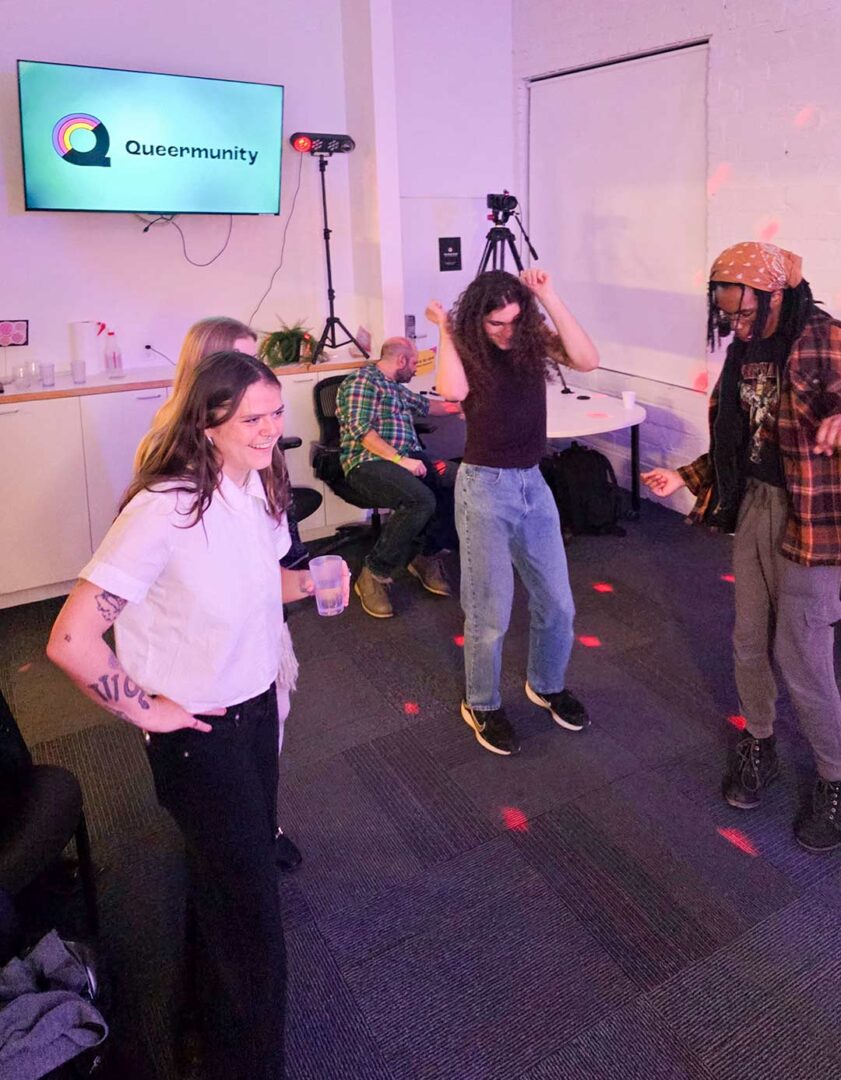
Artists can also choose what time of day to have their events, having the ability to further their own atmosphere and artist identity. The space may only be around 200 square feet, but it is large enough for a DJ setup and has room for dancing.
Though Otey says the first two concerts featuring Nur-D and rø have been an incredible asset to Queermunity, their reality as an LLC could be cut short.
“We have been open for a year, and we will not be open for another year if people don’t start coming and supporting Queermunity and keeping us going,” Otey says. “A reason why third spaces like these do not exist is that people tend to take them for granted and not invest back.”
From colder Minnesota winters causing a lack of motivation to leave the house, Otey says turnout has decreased.
“You have to show up even when it’s cold,” Otey says. “You have to throw in your five or 10 bucks into the hat to help pay the artists. We have to invest our time, our treasure, and our resources back into each other to keep this going.”
Otey said the community is thriving creatively, with strong collaborations, new ideas, and growing offerings, but added that financial support is critical.
“The community has to show up to support fair pay, entertainment, and community,” Otey says. “If not, we won’t be able to continue doing this.”
Mic Check Born from a Nationwide Tiny Desk
If you consider yourself to be even a casual fan of music or a baseline pop-culture informee, then you know NPR’s intimate “Tiny Desk” concert series. It features live music from emerging to seasoned artists from a cluttered desk in a small room in NPR’s Washington, D.C. office.
What makes the Tiny Desk concerts so appealing is the visuality and authenticity each performance holds, highlighting raw, unedited talent (no auto-tune, air horns, or trapezes are allowed), fostering a unique connection with audiences.
So, when Nur-D and DJ Hayes entered the space, a concept was born: to take the unused office space and create a Tiny Desk concert series, Minnesota style. The series, named “Mic Check,” has one goal: to create an equitable launch pad that serves emerging, queer and BIPOC artists while eliminating barriers to entry.
That’s why all of the shows in the series are not only intimate with 30 people or fewer, but also pay what you can.
“We don’t want the intimacy of it to only be associated with wealth and exclusivity,” Nur-D says. “We want everyone, regardless of financial situation, to be able to enjoy music.”
When asked what his own strengths are, Nur-D turns the direction, saying, “Let me just gas up Ryan,” and recalls what it was like starting FairPlay, and the guidance and industry knowledge of DJ Hayes.
“Ryan has been deeply involved in the Twin Cities music industry for years; his expertise, his knowledge, his wisdom on how things worked, was really helpful to us, like making plans and making decisions, not to mention technical expertise that I will never achieve,” Nur-D says.
DJ Hayes says that what makes the duo work so well together is Nur-D’s ability to look at big picture ideas and see the long-term vision in projects.
“Now more than ever, in the world we live in, and amid what is being said, many people feel that simply being themselves or walking down the street can put them in danger,” Nur-D says. “Having access to an intimate, safe space to express those feelings is imperative for the queer community, and especially queer people of color — the more we can do that, the better off we are.”


5200 Willson Road, Suite 316 • Edina, MN 55424
©2026 Lavender Media, Inc.
PICKUP AT ONE OF OUR DISTRIBUTION SITES IS LIMITED TO ONE COPY PER PERSON