



Goodbye to a Safe Place to Heal
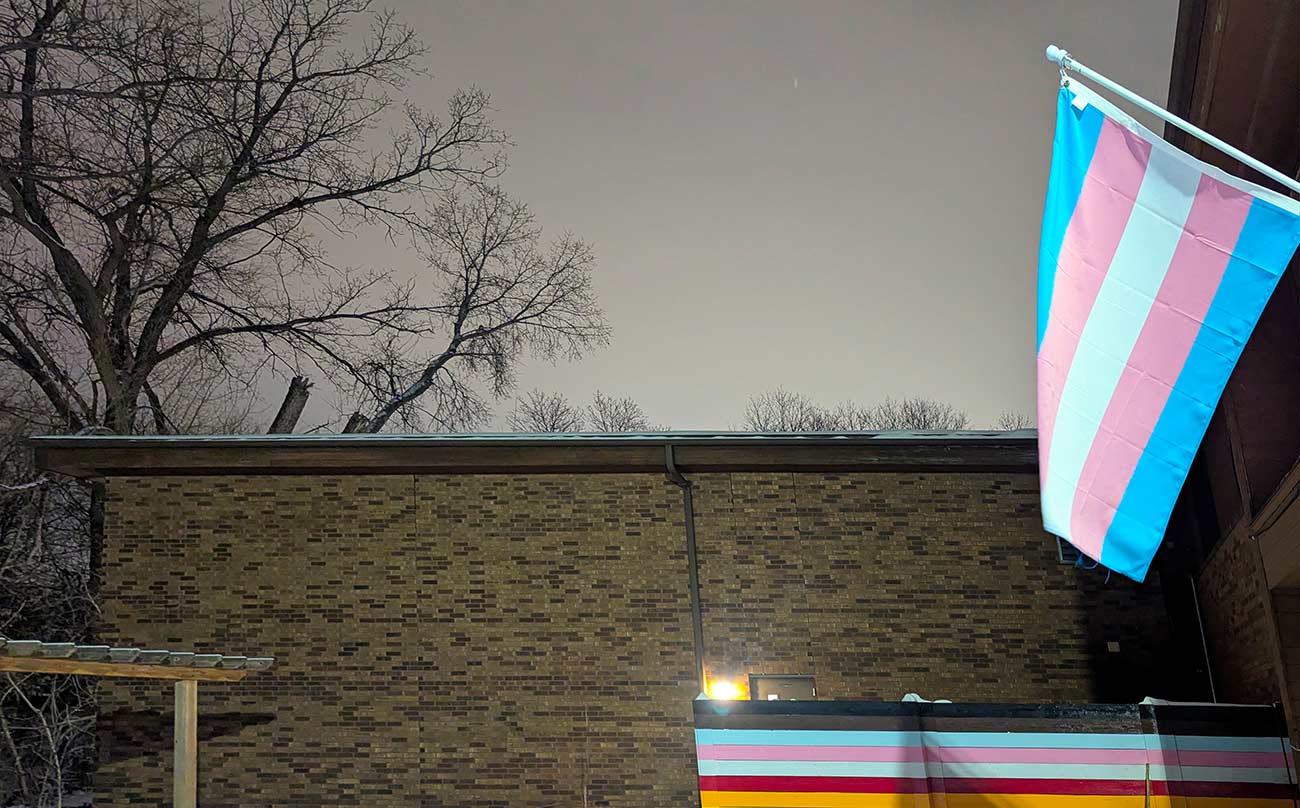
Past clients mourn the closure of Pride Institute’s inpatient program after nearly 40 years of LGBTQ+-specific residential addiction and mental-health treatment
When Universal Health Services, Inc. announced last month (December 2025) that it would close the inpatient treatment program at the Pride Institute in Minnesota, the news rippled through LGBTQ+ communities across the state like a shockwave. For nearly 40 years, Pride has been one of the only LGBTQ+-specific residential treatment centers in the U.S. — a place countless people describe as life-saving and life-changing, and for many, the first place they ever felt safe in their own skin.
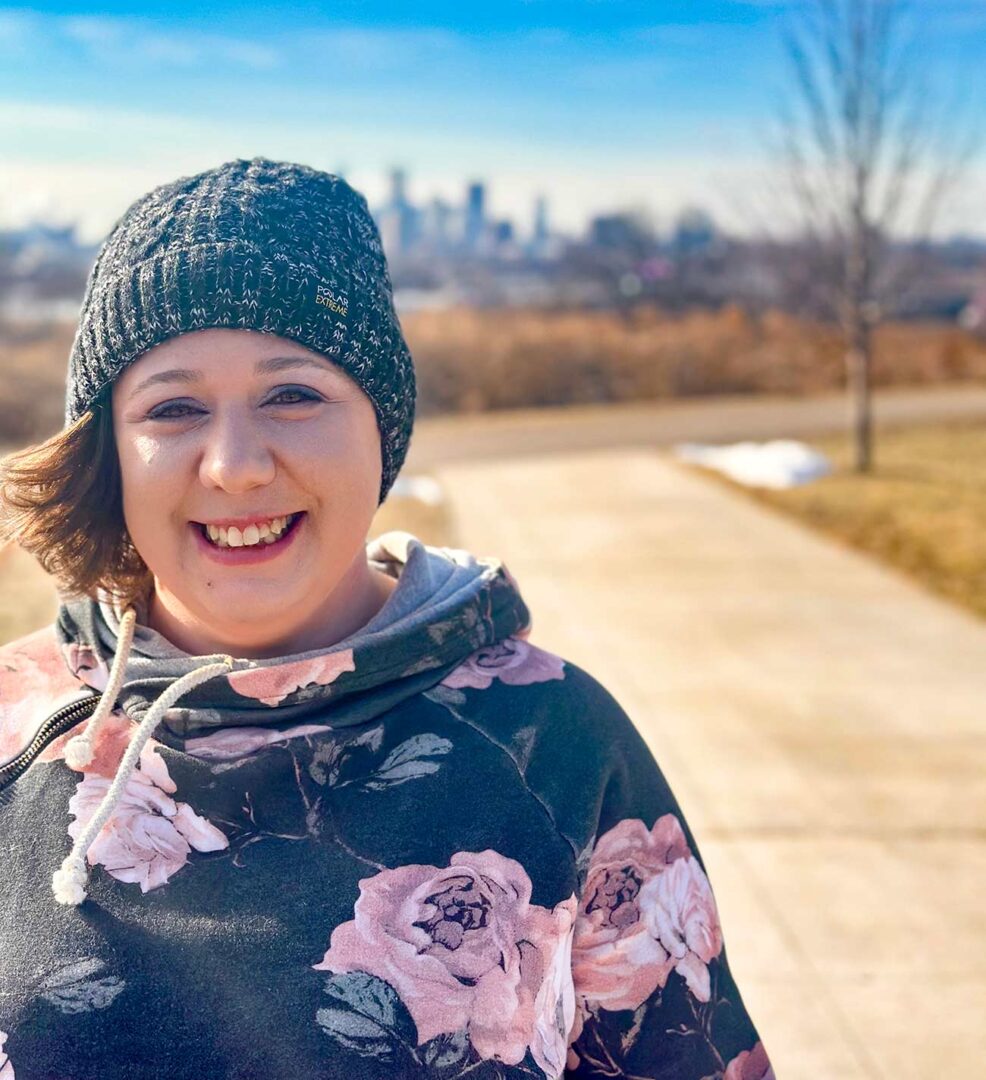
“Had it not been for Pride, I either would not be alive or I would have not become myself,” said Clarke Thielen, a non-binary Minnesotan in their 30s who went to Pride a few years ago. “And honestly, I think not becoming myself would be worse, because not living authentically as who I am feels like a worse fate than death.”
To Thielen, the closure is devastating.
“I know that people are going to die,” Thielen says. “I know if I hadn’t gone to Pride, I would have, and I know so many others who can say the same.”
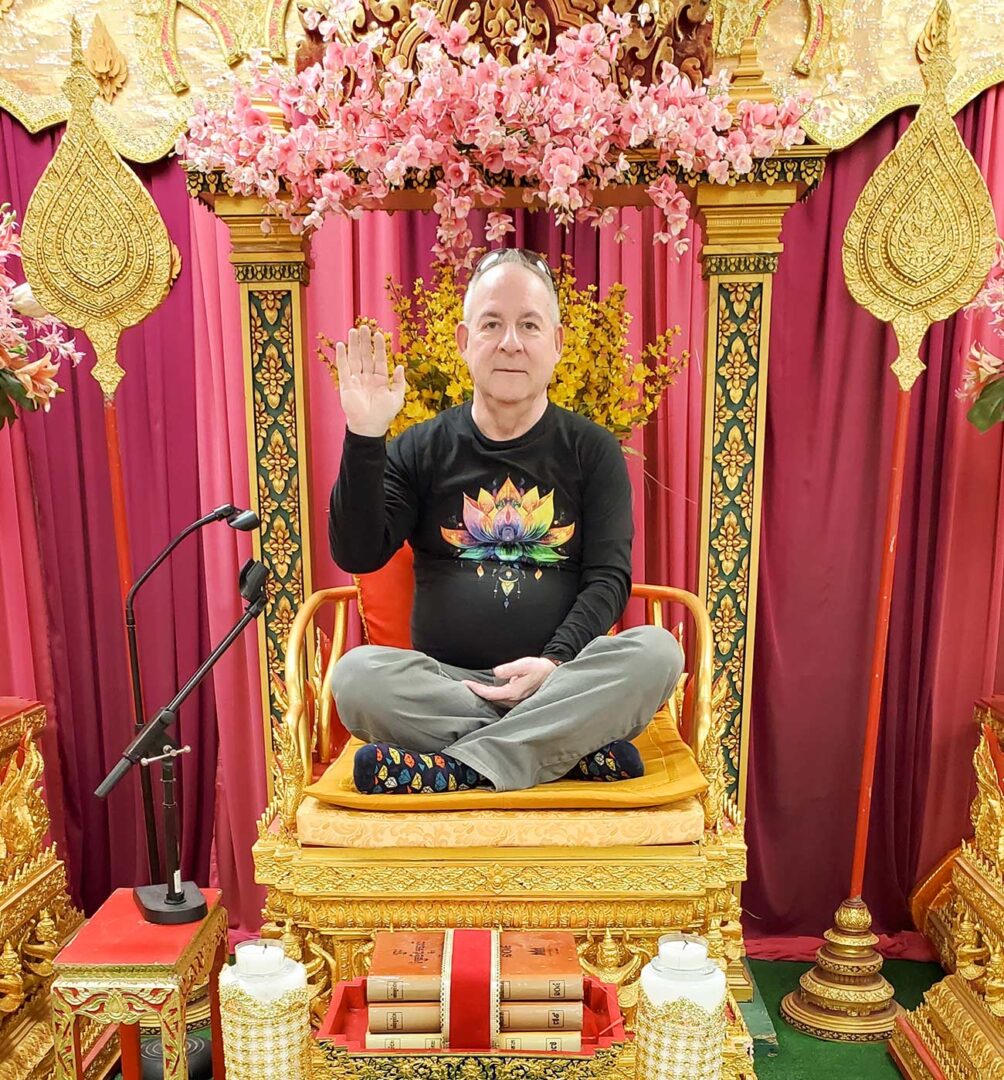
Art LeBeau agrees. “We need a safe space to open up about ourselves because we can’t do this alone, and if we don’t have that safe space, we’re going to die. There are people who are going to die.”
The Massachusetts man came to Minnesota for the Pride Institute’s residential program in 1990 and 1996.
“I’m distraught that they are not going to be a residential program,” he says. “I really feel strongly in what they did and how effective they were at doing it.”
“There are plenty of people who need that resource, and to have that taken away from them is simply devastating to our community,” he continues. “There is a reason why LGBT is a special interest group in AA, and I think it needs to be a special interest group in recovery communities all around because there is stigma still, there is homophobia still. It’s not gone away. That’s reality.”
A place to become authentic
Thielen describes walking into Pride as stepping into a world where queerness, trauma and addiction weren’t something to hide, tiptoe around or explain.
“It was the first space where I spoke my name out loud,” Thielen says. “That was one of the most powerful, empowering moments of my life. Had it not been for Pride, I either would not be alive or I would have never become myself — and not becoming myself would be worse.”
Before Pride, Thielen used they/them pronouns only in limited environments, mainly within a Unitarian Universalist church that offered a pocket of safety, and they went by their deadname. But the idea of living authentically in the wider world felt terrifying. Clarke worried most about their children and how coming out as non-binary more publicly might impact them in a rural community.
At Pride, staff and peers challenged that fear in ways that changed everything.
“They asked me, ‘What impact will it have on your kids if you don’t become who you are? What example does that set?’” Thielen recalls. “That was life-changing.”
The day Thielen said their name out loud during evening reflections, where each client shared their name, something about their day and an affirmation.
“I remember locking eyes with someone who understood me better than anyone ever had, and I said, ‘Hi, my name is Clarke, and I’m a f—-ing warrior.’ And then I cried. It was a declaration of identity, of existence and courage. That’s what Pride gave me,” Clarke says. “The safety to be who I am so I could actually do the deeper healing — my trauma, my substance use, my mental health. Without the LGBTQ-inclusive part of treatment, the whole puzzle wouldn’t have fit.”
Barriers during HIV/AIDS epidemic
LeBeau sought treatment in Massachusetts at a time when being an openly gay man was, well, discouraged, to say the least.
“None of the treatment centers I went to wanted me to let people know I was gay. I was told not to come out,” he says.
Between 1990 and 1996, he struggled to stay sober and was in and out of treatment in his home state. He never felt he fit in until he went to Pride Institute.
The center opened in Eden Prairie in 1986 during the HIV/AIDS epidemic as a safe haven while gay and bisexual men encountered discrimination in all areas of their lives. Some people with AIDS were kicked out of their homes, not touched by medical professionals, and some lost their jobs, according to David W. Purcell’s publication in the National Library of Medicine, “Forty Years of HIV: The Intersection of Laws, Stigma, and Sexual Behavior and Identity.”
“It was something that really meant that, okay, then I’m not having sexual intimacy because I’m not willing to die yet, and so for me, that was a big part of that isolation, which was a big part of my drinking,” LeBeau says of how the HIV/AIDS epidemic affected him.
Arriving at Pride felt like finally exhaling.
“For the first time, I found my people,” LeBeau says. “Pride was my coming-out experience.”
Even after multiple treatment attempts elsewhere, Pride was the only place where he was allowed to be honest — and honesty, he says, was essential to getting sober.
“Other places told me to hide,” he says. “Pride told me to breathe.”
It was also a safe space for him to explore his sexuality, even while the fear of HIV and AIDS was rampant.
“It was freedom,” LeBeau says. “It’s probably the one single word I would use to describe it, to know that I didn’t have to hide that part of my identity.”
During one of his stays at Pride Institute, he was attracted to another client.
“I didn’t know what the hell to do with that, and I talked with my counselor about it, and he just said, ‘Well, tell them,’” LeBeau recalls. “I was like, what? Are you crazy?”
LeBeau told the person he was attracted to them.
“And you know what? It didn’t kill me,” LeBeau says. “It actually got me to open up and connect with someone.”
LeBeau said his admission didn’t change anything in their relationship, but he got to practice vulnerability.
“I felt safe enough that I was willing to try it, even though I didn’t know the outcome. I don’t know that I could have had that experience anywhere else,” he says.
Why Pride Mattered
To understand the grief around Pride’s closure, it’s necessary to understand what made it unique. Substance use disorders and mental health struggles often intersect with minority stress — especially for LGBTQ+ people, who experience disproportionately high rates of trauma, discrimination, homelessness, family rejection, barriers to care and substance use. Between 20% and 30% of gay and transgender people abuse substances, compared to about 9% of the general population, according to American Progress.
Standard treatment settings can unintentionally replicate oppressive dynamics — misgendering, heteronormative assumptions, lack of cultural competency or environments that feel unsafe for people whose trauma is rooted in identity-based harm.
Some LGBTQ+ people who seek treatment elsewhere describe feeling retraumatized rather than supported.
“I know people who went to non-LGBTQ treatment centers and were just traumatized further,” Thielen says. “Pride was sacred in a way that can’t be found elsewhere.”
Residential treatment is different than outpatient programming because clients can’t leave residential, making a return to substance use less likely during their stay. In outpatient programs, clients come to the treatment center only for programming and then return to their homes, leaving more freedom and risk of returning to use. Some people also need to be physically taken away from substances in order to stop, and outpatient simply isn’t enough.
“You go home at night,” Thielen says. “You lose that family. That safety. For queer people who don’t feel safe at home, 24/7 support matters.”
Joy as healing
For many, Pride wasn’t just a treatment center — it was home, a family, a place where they could express queerness loudly, joyfully, safely.
“It was gay summer camp,” Clarke laughs. “Well — winter camp. But you get it.”
Being surrounded by sober LGBTQ+ people transformed what joy meant for Thielen. Karaoke nights, games and the cheesy slogans at evening reflections that people rolled their eyes at but secretly cherished were part of the healing. For example, a client would say, “I love my Pride family” as their affirmation and the 40-something other clients would yell back in unison, “and your Pride family loves you right back. Hey!”
“Joy isn’t just a result of healing; it’s a part of it,” Thielen says. “I realized I could have fun without drugs. I realized I was alive.”
Pride didn’t just help Thielen survive — it altered the course of their life. The impact of the staff inspired them to enter the mental health field, where they now work with people navigating trauma, identity and substance use.
“They showed me my purpose — creating safe, inclusive spaces for other people,” Thielen says.
Susan Daub is a mental health therapist at Pride and has seen the program’s magic working since 2017.
“I’ve watched clients come in terrified and really insecure about their identity, really scared of what’s next for them, and I’ve seen them completely evolve and change, become who they were meant to be in a really short period of time,” Daub says. “It’s pretty miraculous.”
A particular memory that sticks out to Daub is when all the clients had to remain in a group room for hours while staff dealt with an emergency. She and a nurse looked at the cameras to observe the clients and saw that they made costumes and turned the group room into a dance party.
“It stands out to me as this is why I love this place. How do you even describe to people what joy and creativity?” she says. “At any other place, they would have been tearing down the walls, but no, we’re making the best of this, and we’re going to have fun here. We watched [the live video footage], and we were laughing and crying.”
What comes next
On January 1, Pride’s inpatient program will officially end at 14400 Martin Dr. in Eden Prairie. LGBTQ+ outpatient services will continue in Minneapolis under a new umbrella organization, Foundations Minnesota, while inpatient LGBTQ+-specific treatment will be relocated to Michael’s House in Palm Springs, Calif. Foundations Minnesota will also offer a partial hospitalization program, intensive outpatient program and virtual intensive outpatient program for co-occurring substance use disorder and mental health treatment for adults 18 and older that is not LGBTQ+-specific.
“We remain committed to affirming care, community, and inclusive healing,” says a spokesperson on behalf of Pride Institute. “These adjustments allow us to keep programs accessible for more people who need our help.”
Daub hopes that someone will be able to open a facility like Pride Institute.
“I am hopeful that somehow, some way, something good will come out of this, that somebody is going to come through and a new program, an opportunity is going to come up, and we’re going to find something that’s going to take its place,” Daub says. “I really do.”
For Clarke, and for countless others, Pride was a lifeline.
“It saved my life,” they say simply. “And I know it saved many others.”
As Minnesota prepares to say goodbye to this sacred space, one truth remains: Pride’s legacy lives on in the people who walked through its doors and in the communities they now shape, support and fight for. They carry its spirit forward, even as the building goes quiet.
LGBTQ+ treatment in Minnesota
- Inpatient services
- EOSIS Latitudes is a 14-bed, LGBTQ+ residential facility that treats substance use and mental health needs in St. Paul.
- EOSIS Latitudes is a 14-bed, LGBTQ+ residential facility that treats substance use and mental health needs in St. Paul.
- Outpatient services
- Under the new structure, Foundations Minnesota will offer Pride LGBTQ+ outpatient treatment in Minneapolis.
- Fellowship Recovery has a daytime LGBTQ+ track for substance use and mental health needs in Minneapolis, and it has a lodging program.
- Elite Recovery offers a daytime LGBTQ+ track for substance use and mental health needs in St. Paul.
- LGBTQ-specific meetings: There remain LGBTQ+-identified recovery and peer-support groups (e.g., LGBTQ+-friendly AA/NA), which can be found by using the Meeting Guide app.



5200 Willson Road, Suite 316 • Edina, MN 55424
©2026 Lavender Media, Inc.
PICKUP AT ONE OF OUR DISTRIBUTION SITES IS LIMITED TO ONE COPY PER PERSON