


Embracing Change: Beth Graczyk’s ‘A Body (Un)Becoming’
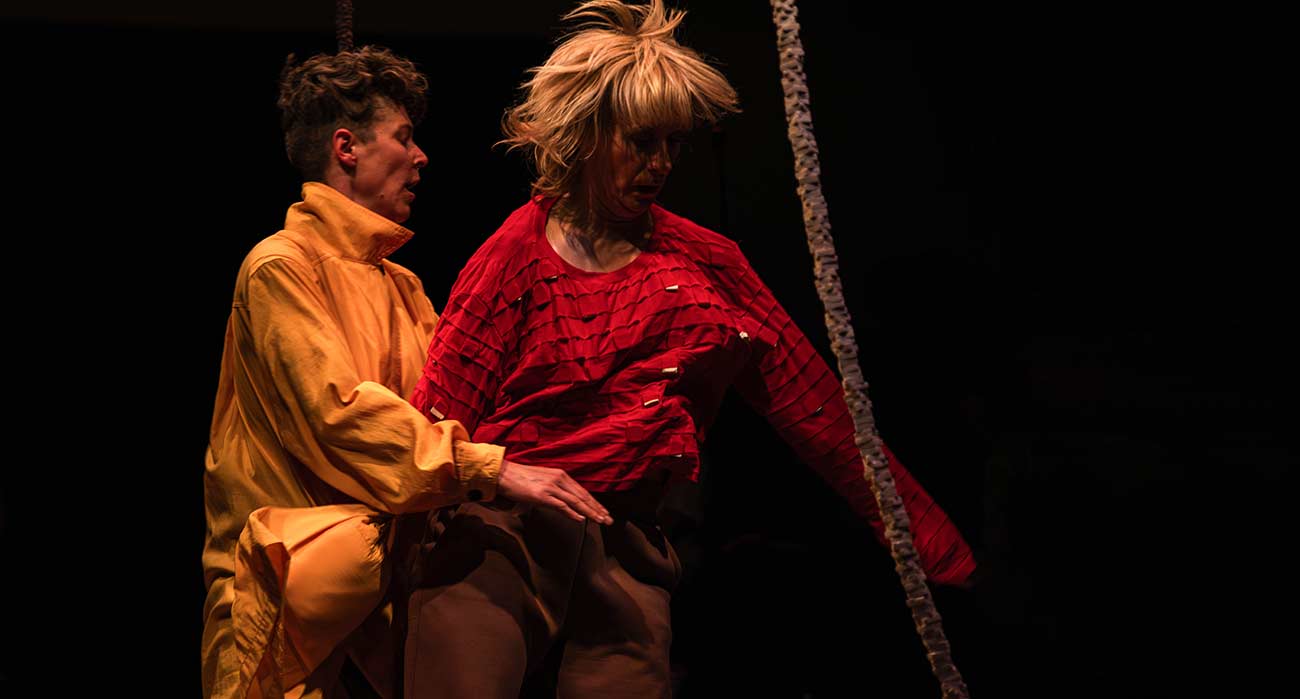
Audiences will soon gather for a performance that resists easy explanation or definition. Created by choreographer and dancer Beth Graczyk, “A Body (Un)Becoming” blends dance, live music and sculptural elements into something both intimate and unexpected. The dance duet, made in collaboration with composer Aaron Gabriel and dancer Leah Wilks, explores what happens when things fall apart and take shape again.
At the center of the work is a simple but powerful idea.
“Two intertwined experiences drew me to that tension between decay and transformation,” Graczyk says.
Her process began with biomaterials, using everyday organic matter like pine needles, charcoal and eggshells. One material kept returning.
“Eggshells stayed with me because they were everywhere,” she says. “No matter where I was, people were eating eggs.”
What started as a common object became something more. Graczyk began grinding the shells into dust and reshaping them. What she found surprised her.
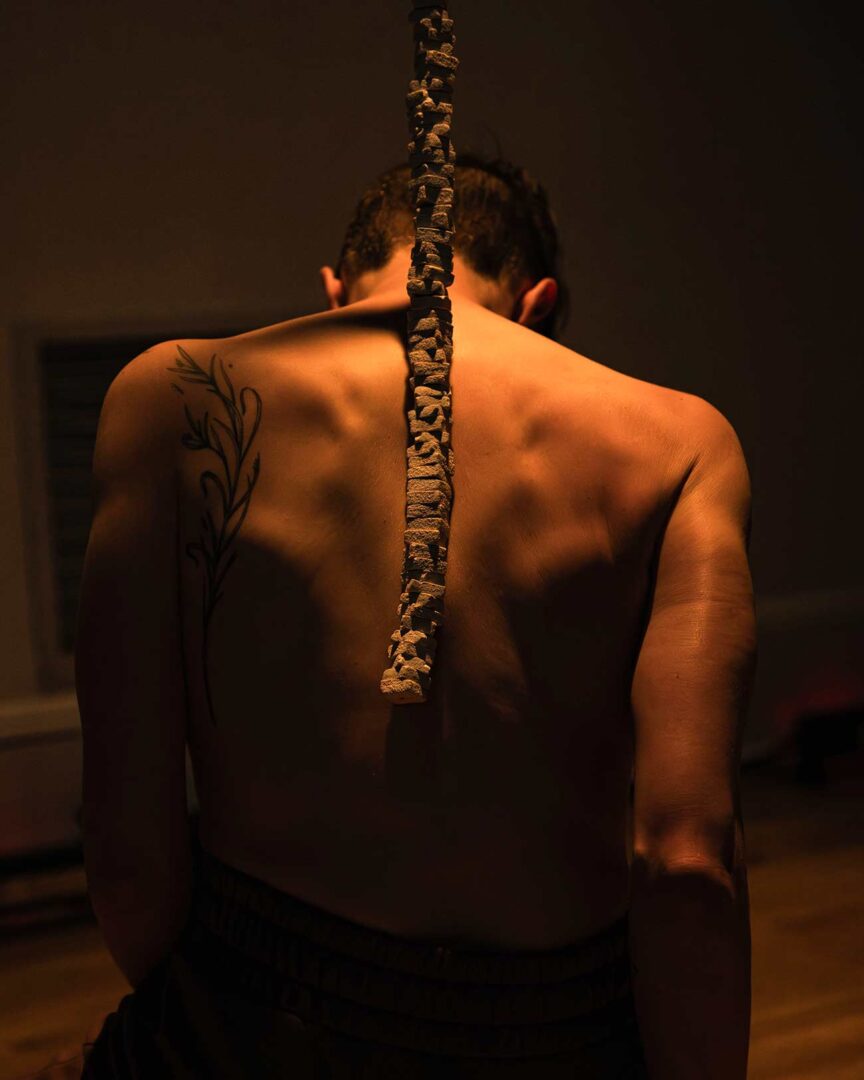
“Something fragile could become dense, durable, almost concrete-like,” she says. “I was moved by that material paradox: what breaks easily can also be remade into something strong.”
In the performance, that idea appears in 8-foot sculptures made from eggshells that move alongside the dancers.
A sense of change is not just material; it is also deeply personal. After more than 20 years as a professional dancer, Graczyk began to notice shifts in her own body.
“I came out of the pandemic feeling changes in stamina, agility and recovery that I had not confronted before,” she recalls.
Dancing with Wilks, who is younger, made those differences more visible.
“The choreography became a place where age was not hidden, but present,” Graczyk says.
That visibility is central to the work.
“The aging female body feels deeply underrepresented,” she says.
Rather than hiding those changes, the piece brings them forward. It also opens up space to rethink identity.
“Even though I use the term female-identified, I stretch that to its greatest possibility through queer imagination,” she says.
Loss also shapes the piece. As the work began, Graczyk lost a close friend.
“She told me that rather than returning as human, she hoped to come back as wind, so she could move through the world lightly, visiting those she loved as something felt rather than seen,” Graczyk says.
That idea carries through the performance, adding a quiet emotional layer.
The work evolved over time, taking shape through different versions and performances in new spaces. Each iteration revealed something new. One of the biggest shifts came in its structure.
“I’ve never made a piece that is a continual transformation from the previous moment,” she says.
That continuous flow shapes the audience experience. Instead of demanding constant attention, Graczyk invites viewers to settle in.
“There is no storyline, but there are ideas that I hope will settle in their own unique ways within the audience’s body during and after the performance,” she says. “I want the audience’s imagination, breath and lived experience to weave into the visual, kinetic and sonic imagery we build.”
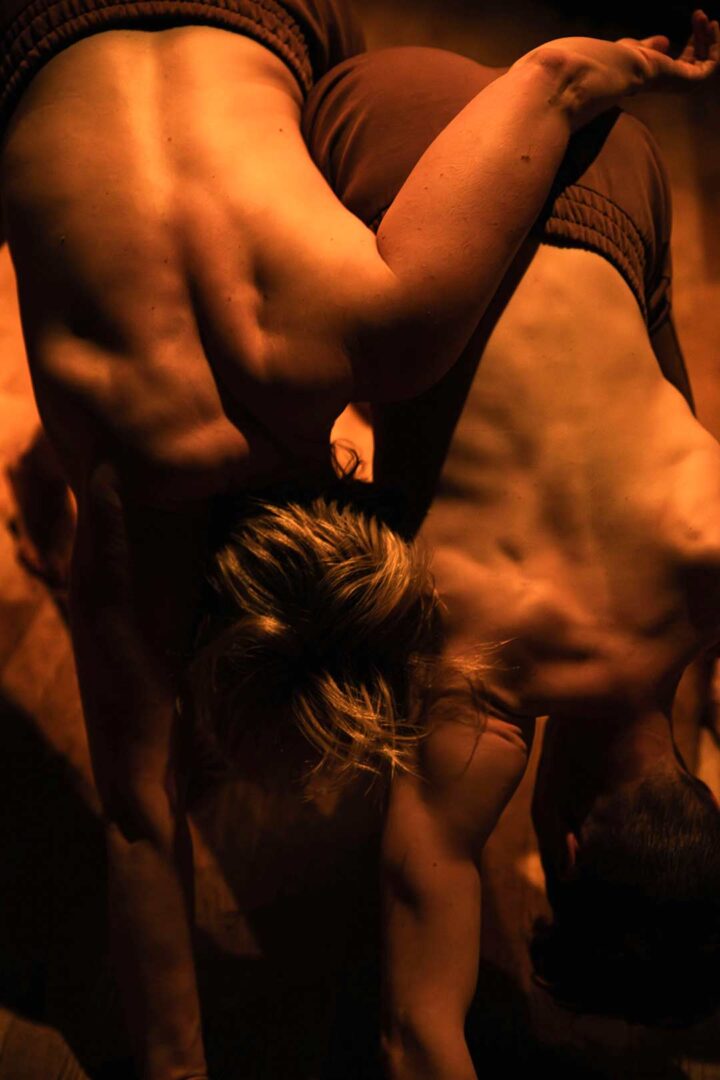
Collaboration is key to creating that environment. Graczyk has worked with Gabriel for 10 years, building a strong creative partnership, while Wilks brings another perspective to the stage.
“I believe in collaborative processes,” Graczyk says. “But I love it when the piece feels like it belongs to all of us.”
For Graczyk, sharing this work in Minneapolis carries special meaning.
“Minneapolis and the Twin Cities continue to be my hero,” she says. “I feel so embraced as an artist and a person.”
It is a place where experimental and queer work can thrive. “A Body (Un)Becoming” is also part of a larger series called “Desire Motor,” which Graczyk began in 2016. Each piece builds on the last, carrying forward ideas and questions.
“I think about the relationship between emotions and physical actions,” she says, “such as the relationship between gravity and grief.”
In the end, the performance does not offer clear answers. Instead, it asks viewers to sit with change, notice what shifts and consider what might emerge next. Like the eggshells at its center, it suggests that breaking is not an end, but part of becoming.
“A Body (Un)Becoming”
May 22 and 23
7:30 p.m.
Center for Performing Arts, Minneapolis
bethgraczykproductions.com





5200 Willson Road, Suite 316 • Edina, MN 55424
©2026 Lavender Media, Inc.
PICKUP AT ONE OF OUR DISTRIBUTION SITES IS LIMITED TO ONE COPY PER PERSON