


‘Beard’ by Kelly Foster Lundquist — Heteropatriarchy Has Us All Pretending

The Minnesota author’s debut memoir illustrates how we all hide our true selves and the many forms “coming out” can take
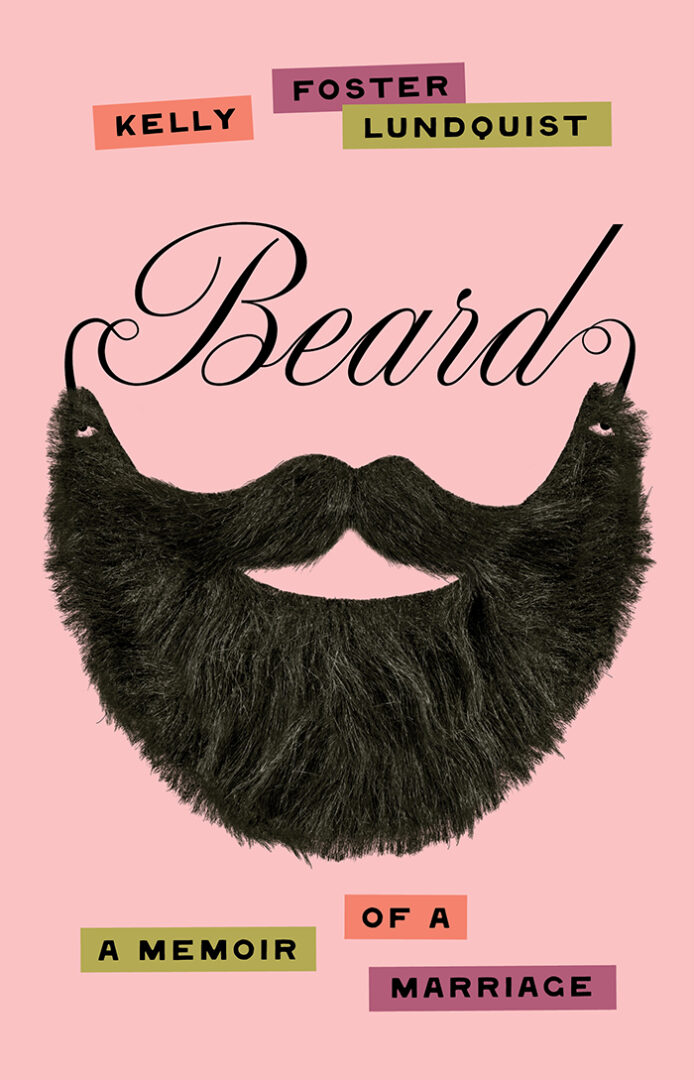
When thinking about disguises, the first thing that may come to mind is a fake beard. It hides the contours of the jaw and the negative spaces between nose and mouth and mouth and chin, lending the wearer plausible deniability of their identity.
It’s appropriate, then, that a “beard” can also refer to the opposite-sex partner of a closeted gay person.
Living a closeted life can be incredibly painful, but as Minnesota-based author Kelly Foster Lundquist shows in her debut memoir, “Beard: A Memoir of a Marriage,” that pain is not solely felt by the closeted person. In fact, they’re not always the only ones in hiding.
“Beard,” which hits shelves Oct. 24, unravels the author’s marriage to her then-closeted ex-husband, Devin, whom she met when they were both counselors at a Mississippi evangelical Bible camp. The repressiveness of this cultural environment for queer people is readily apparent, but “Beard” is Lundquist’s story, not her ex’s. From her perspective, the reader gets to see how Devin was her beard as well, as their marriage helped her feel belonging to her strict, heteropatriarchal faith community — ironically, the same one they first bonded over feeling alienated from.
“[‘Beard’] is about the fallout of all of the systems that silence and shame and isolate us. And it’s not just one person that’s impacted by it,” Lundquist says. “I very much realized that [Devin] made me feel like I had a shorthand for acceptance and belonging. For my queer friends, their reaction to it has been about the sort of nuclear residue that’s left from conversion therapy.”
Lundquist, now in her 40s, has shapely silver curls, bright brown eyes and an infectious enthusiasm. She describes all interactions with friends as “laughing” with them, and provides “one-million-” and “one-zillion-percent” confirmation to clarifying questions.
The resemblance she bears to Judy Garland, the gay icon and fellow beard who makes several appearances throughout the memoir, is on the nose. Behind each woman’s smile is immense wisdom hard-won from tumultuous lives.
Another piece of the puzzle, explains Lundquist, was trying to own her own complicity in these systems of oppression as a straight white woman. At one point in the memoir, she writes about suggesting conversion therapy-esque websites to Devin, which he vehemently refuses. However, the reader can see this moment through a sympathetic lens, as they’re both trying to navigate uncertainty the only ways they know how.
“My question is, what if I was the thing that was killing him?” Lundquist says. “In so many ways, I was the culmination of conversion therapy for him.”
Lundquist also dissects the “beard” trope as seen in media and popular culture, often shown through an overly plain woman with no “gay-dar,” as it were, who shacks up with a strikingly handsome man with a deep bond with his male “best friend” or some other indicator of queerness that goes over the woman’s head. In response, Lundquist asks, “What does that make me?”
Use of the present tense throughout creates a feeling of immediacy, as if the reader is watching everything play out by Lundquist’s side. It emphasizes her poignant, tender-one-moment, chilling-the-next writing style. It elucidates the complex queer theory she engages with in grad school, which, by design, is not easily understood.
It also adds viscerality to already graphic descriptions of Lundquist’s period of disordered eating and body dysmorphia, which was how systems of oppression wreaked havoc on her. Readers sensitive to this subject matter should beware.
This year will mark 22 years since the first domino fell in Lundquist’s marriage during a post-Halloween round of drinks in Boystown, Chicago. She had dressed as Liza Minelli, also a beard at one point, like her mother, Garland. This year, Lundquist says she and her 11-year-old daughter will dress as Garland and Minelli and make a pilgrimage back.
Lundquist says at the time she remembers thinking, “I’m probably gonna write about this.” Now, after the culmination of her life thus far, she says there are plans to continue writing, but it’s too soon to get into specifics. She mentions comparing idealization and real experience with regard to her Minnesotan husband in a project tentatively titled “How to write a Hallmark movie.”
Us queer folks are naturally very protective of our stories, but it’s clear how much Lundquist took care to write her own story in relation to her closeted husband and not claim his as her own. She describes how engaging with queerness and building community with queer people helped her see the cognitive dissonance in her evangelical upbringing, as well as her own detachment from cisgender identity that she is still exploring. Queerness, ultimately, is what helped her empathize with her ex when he came out. It’s what helps them shave their beards off together.
Perhaps those who feel alienated just end up finding each other — we can see what’s underneath the beard.




5200 Willson Road, Suite 316 • Edina, MN 55424
©2026 Lavender Media, Inc.
PICKUP AT ONE OF OUR DISTRIBUTION SITES IS LIMITED TO ONE COPY PER PERSON