


At California Street Farm, Queer Ownership and Urban Agriculture Intersect
Located on a residential block in northeast Minneapolis, California Street Farm has grown into more than an urban farming operation. Owned and operated by queer sisters, the small neighborhood farm is both a source of fresh produce and a visible expression of LGBTQ+ presence in the local urban vegetable and flower farming community.
California Street Farm sits on land leased from the owners of the California Building and was originally founded in 2012 by Jim Bovino and Jillia Pessenda. Over the years, several growers worked the land before the farm was reinvigorated in 2019 by Ashley Thorfinnson and Chris Barth.
In 2022, Elyssa Eull took a business class through the Land Stewardship Project, where she met Thorfinnson and Barth. During the course, the pair mentioned they were looking for someone to take over management of the farm. After an interview process, Eull was selected and has managed California Street Farm since.
Before taking on the role, Eull worked on various vegetable and livestock farms in Minnesota and Massachusetts for several years. Her goal with California Street Farm is to create a space rooted in belonging and learning while growing nutritious, accessible food and respecting the soil.
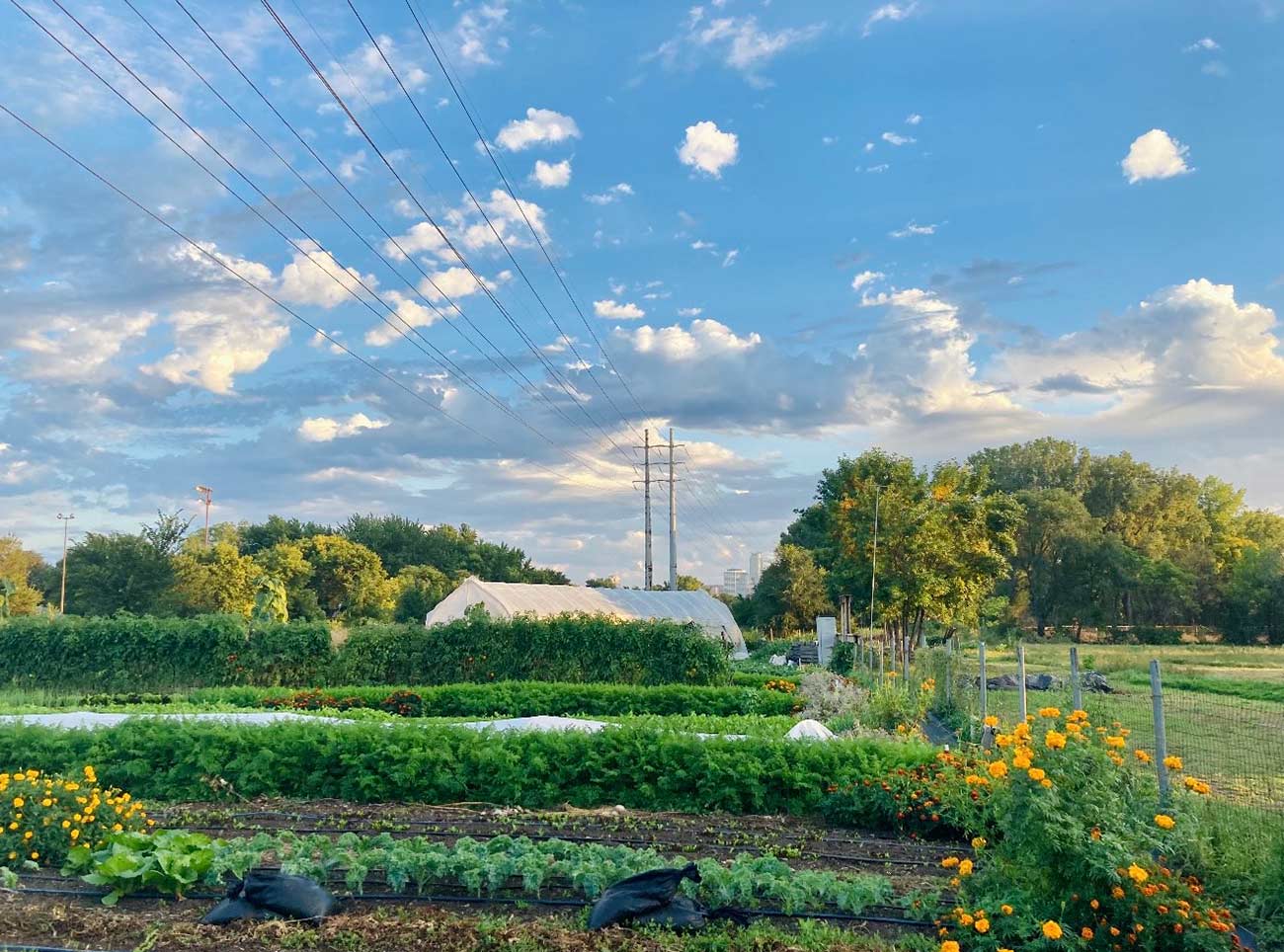
Eull describes the farm as “a third of an acre smushed up against a railroad track that one could almost miss.” A closer look reveals densely packed vegetable beds alongside pollinator species such as honeybees, butterflies and wasps.
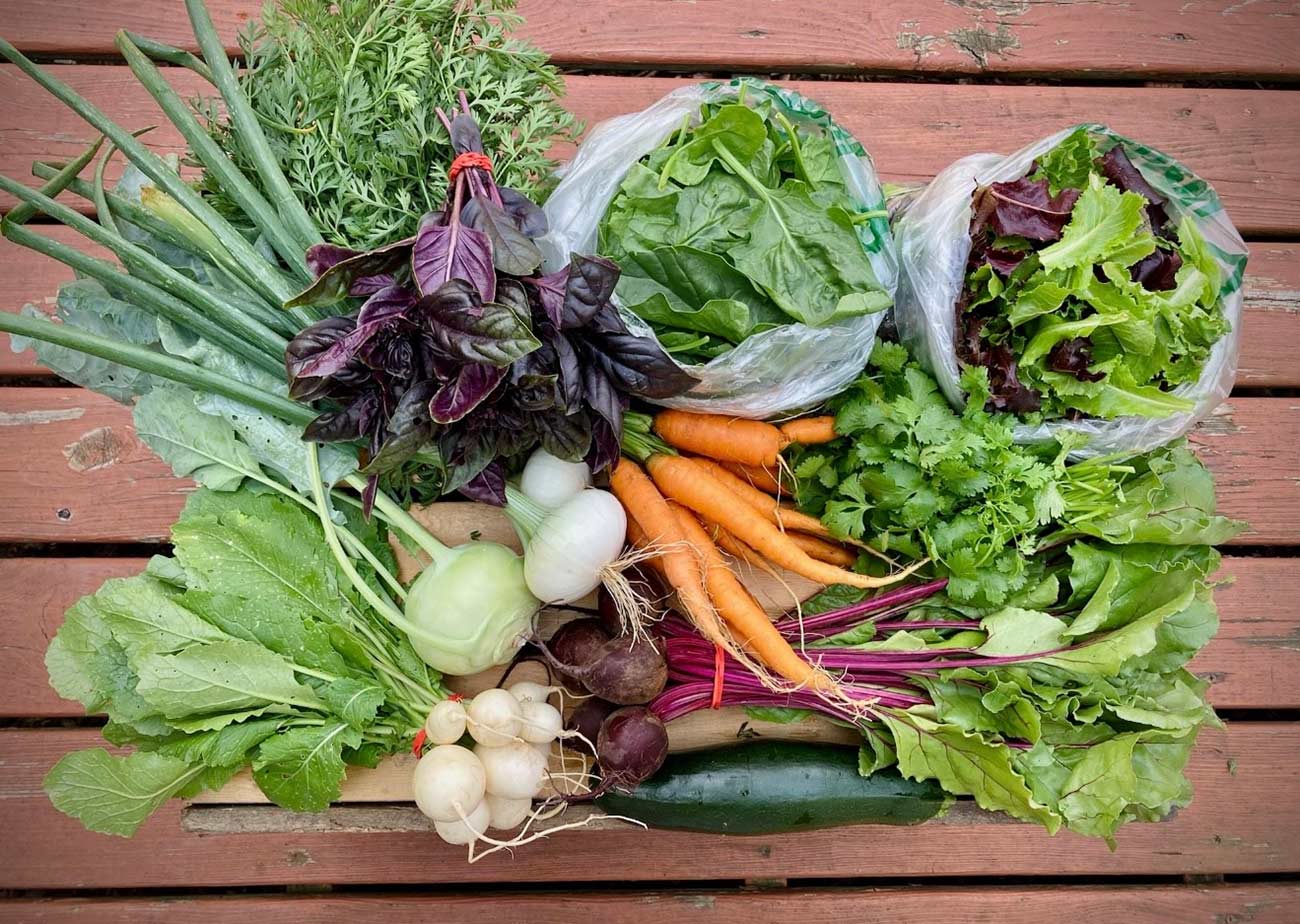
The farm grows a wide variety of vegetables, fruits, herbs and flowers. Produce is sold at the Northeast Minneapolis Farmers Market, through a community-supported agriculture (CSA) program at a Monday night farm stand, and to restaurants in northeast Minneapolis.
“It’s really important for me to find other female farmers and other queer farmers that I can connect with who get me,” Eull says. “Being in an urban setting makes that a lot easier. I feel like there are a lot of like-minded folks around me.”
Farming remains a male-dominated field, and the average age of a U.S. farmer is 61. Eull says her work differs significantly from traditional agriculture.
“The type of farming I do is so different from what people consider traditional farming in our country,” she says. “It’s not large-scale crop farming. It’s community-based, small-scale vegetable production.”
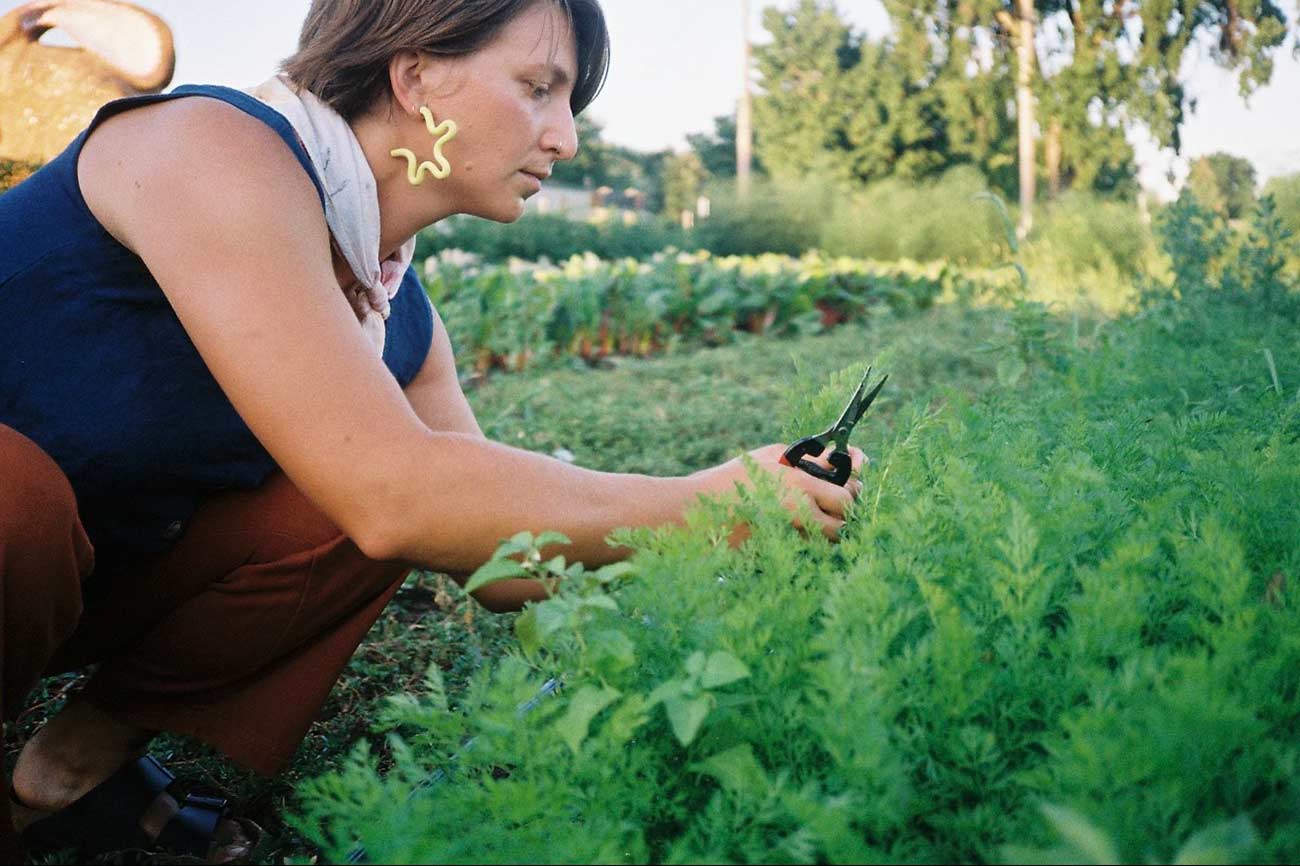
Through local agriculture organizations such as the Land Stewardship Project and social media platforms like Instagram, Eull has connected with other nontraditional farmers.
“Minnesota is a great state to be a queer farmer,” she says. “There are a lot of people doing similar work, and you’re able to find support and connection.”
Eull recalls an incident from a year or two ago when a Pride flag displayed outside the farm was burned.
“When I showed up, someone had already taken the remains of the flag down, folded it neatly and left a note,” she says. “They wrote that they had ordered a new, fire-resistant flag and explained that they were also a queer urban farmer.”
“I feel like we are very held by our community, and folks love having us here,” Eull continues. “It would be entirely different — and much harder — to find that kind of support in a rural setting. We really feel that love in Minneapolis.”
Sustainability is a core principle at California Street Farm. Eull says the farm uses low- and no-till practices to minimize soil disruption.
“We’re not coming in with heavy machinery,” she says. “Everything is done at a hand scale, which allows us to better care for the soil. That holistic approach is more sustainable in the long term.”
Affordability and accessibility are also central to the farm’s mission. While prices at farmers’ markets reflect the true cost of production, the farm accepts EBT and offers a sliding-scale CSA.
“People can opt in at different levels,” Eull says. “We trust that folks will self-select in a way that evens out and allows the farm to remain viable while keeping food accessible.”
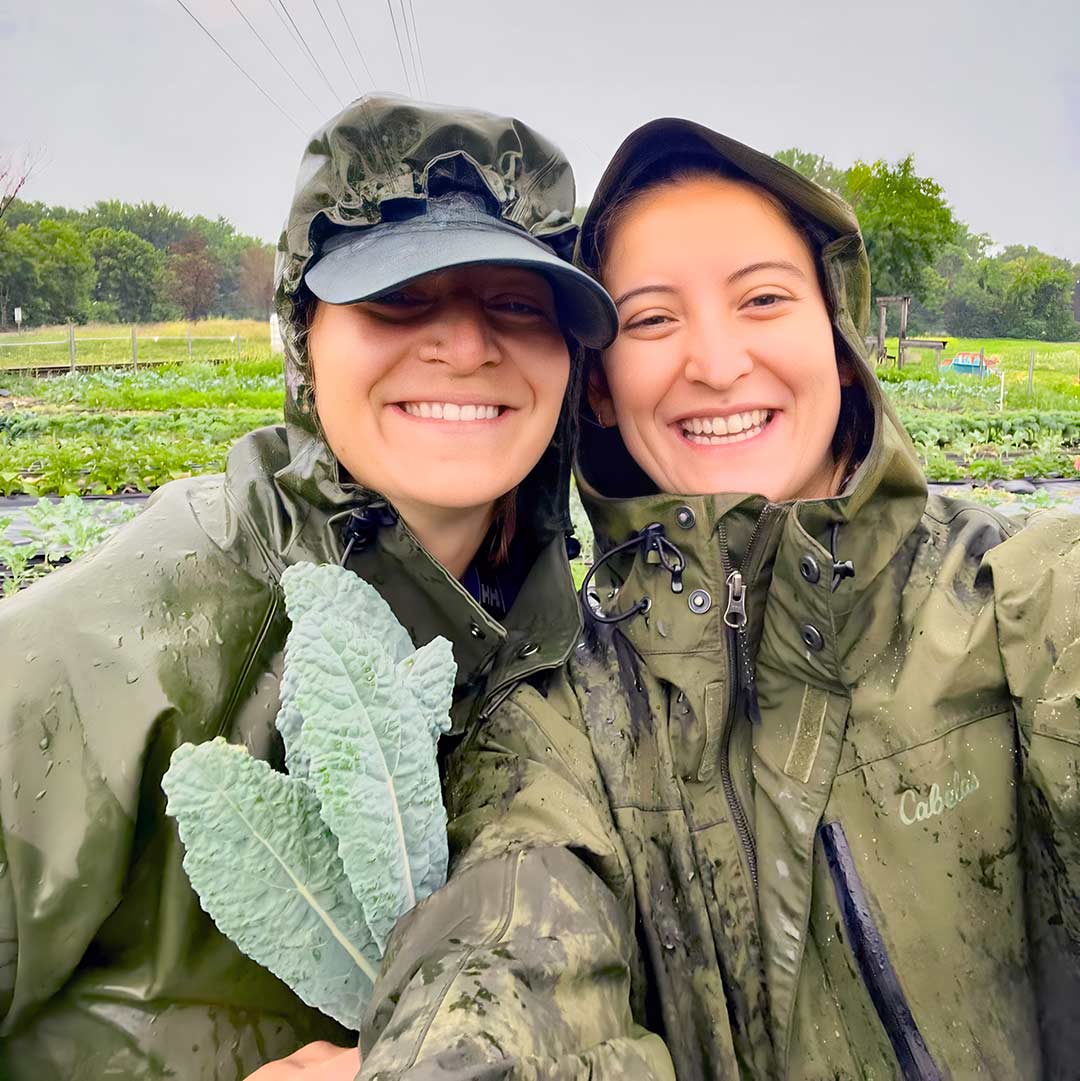
Eull’s sister, Cory Eull, serves as the farm’s harvest assistant and marketing coordinator. She manages social media and the newsletter while also assisting with harvesting and transplanting. Event coordination is another major part of her role.
“It feels very foundational to be present and away from the computer, working with the earth, the community and the plants,” Cory Eull says. “My mental health is at its best during the farming season, even though the work can be physically demanding.”
She says the farm has naturally become a gathering place for the neighborhood.
“It feels like the farm has become a hub in the community without us intentionally trying,” she says. “People are drawn to the green space and the work we’re doing.”
The farm’s next public event is a farm-to-table dinner scheduled for late May, marking the first on-site gathering of the season. California Street Farm will also return to the Northeast Minneapolis Farmers Market in mid-May. CSA shares for the upcoming season are currently available.





5200 Willson Road, Suite 316 • Edina, MN 55424
©2026 Lavender Media, Inc.
PICKUP AT ONE OF OUR DISTRIBUTION SITES IS LIMITED TO ONE COPY PER PERSON