



A Word In Edgewise: ‘I’m a 34-Year-Old NBA Center, I’m Black and I’m…’
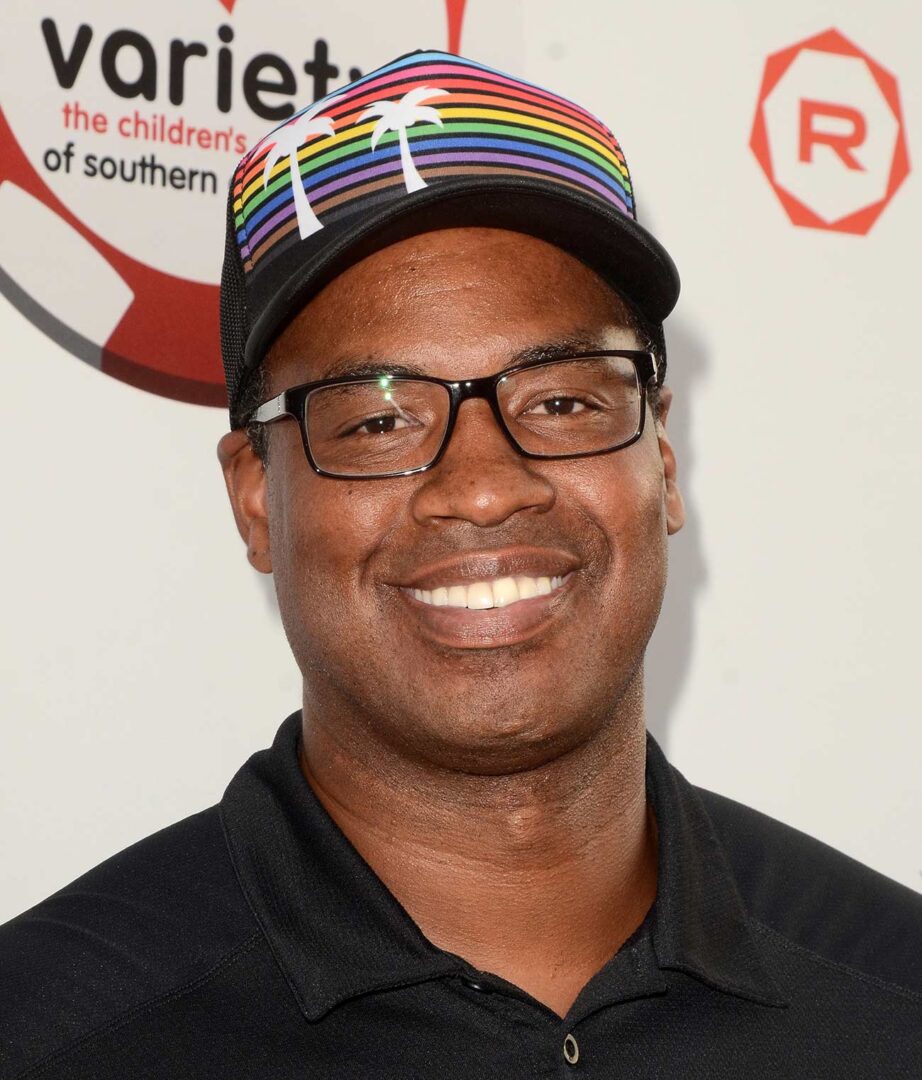
It wasn’t until a friend remarked on the recent passing of Jason Collins that I recalled the NBA athlete who came out as gay in 2013. Moved at the time by his bravery, I imagined how lonely a decision his must have been, wondered how his declaration was received by cohorts in the rarified, masculine atmosphere of the NBA, NFL, MLB and NHL Big Four. I’d hoped others would be emboldened to make declarations — surely, statistically speaking, there must be others, mustn’t there?
Looking back from 2026, I wondered why, at that particular moment, two years before gay marriage was legalized, had Collins decided not only to simply come out, but to go national — global — through the website and pages of Sports Illustrated? How would one even manage to make that happen?
I went back to the sources, and this column was drawn primarily from the original Sports Illustrated interview and two other nearly forensic pieces on exactly how the story went down: SI’s then-Executive Editor Jon Wertheim’s “The Story Behind Jason Collins’s Story The Interview” and The New York Times writer Christine Haughney’s “How Sports Illustrated Broke the Jason Collins Story,” both released April 29, 2013, with the feature.
The total secrecy surrounding the initial meeting was Bletchley Park-worthy. Collins’ agent, Arn Fellen, called SI writer Franz Lidz, offering an exclusive concerning a major league athlete’s announcement that he was gay. Said athlete would meet Lidz and editor at a certain address in a Los Angeles apartment. Lidz and Wertheim showed up still not knowing their subject’s identity. In the days before the interview, they’d been sparing with questions, not wanting the potential interviewee to withdraw.
At the initial meeting, Collins stipulated that he be able to tell his story “in his own words … as a first person account,” and that he didn’t want the publication to coincide with the Boston Celtics’ first home game since the Boston Marathon bombing that had occurred the previous Monday, April 15.
The interview was done with writer Lidz shaping the piece through Collins’s own words. It was decided to initially release the still mystery-enshrouded piece on SI’s website on Monday, April 29, at 11 a.m. (only the fourth time SI had released ahead of newsstand access); not too early to reach Collins by phone in LA and close to lunchtime in the East, SI’s website’s busiest time for hits. Within two hours, the website had garnered 5 million page-view hits, more than twice any previous number. Then, the print hit the newsstands on May 5, and the story was read worldwide.
An aggressive strategy, yes, but that’s the kind of team player Collins was. His job, at 7 feet tall and 255 pounds, was to defend his teammates and secure a win, and no matter how sudden any story bursting upon the scene appears, there’s always a backstory, always context.
Jason Paul Collins was born in Northridge, Calif., welcomed into a loving, tight-knit family on December 2, 1978; followed, to his parents’ surprise, eight minutes later by twin brother Jarren Thomas. The boys remained close, and it wasn’t until Jason was about 12 that he realized for the first time that he and Jarren weren’t always on the same page … at least not about girls. Jason kept this uncomfortable secret to himself.
Later, during the 2011 NBA lockout, when Collins didn’t have the near-daily distractions of team practice, he was forced to focus inward. Silence and secrecy weren’t working; Collins decided to start the conversation, even if, as he put it in the interview, he was the only kid in the classroom with his hand up.
He came out first to his aunt Teri (Teri L. Jackson, first Black woman judge in San Francisco, later presiding judge of that city’s Superior Court), who told him she’d known for years. Twin Jarren had had no clue.
Other factors added to the pressure. Collins relates anger at himself when his (straight) former Stanford roommate marched in a Gay Pride Parade, while he remained silent. Confiding his secret brought a feeling of wholeness, alerting him to the enormous energy drain a kept secret entails. To his grandmother’s concerns, he explained openness would be both honest and preemptive — he’d no longer fear outing by others. The catastrophic Boston Marathon bombing on April 15, 2013, was a tipping point: Collins realized that anyone’s existence could cease in an instant. He’d go public.
Collins wanted a future with the love and support his own family provided; with a partner, a family of his own. Collins declared his gayness two years before the legalization of gay marriage. In 2014, he did find a partner, Mississippian Brunson Green, a movie producer (Oscar-nominated co-producer of 2011’s “The Help”). They lived a decade together, were engaged in 2023, married in May 2025, scant months before Collins’ diagnosis of the aggressive glioblastoma, which claimed him this May 12. Life indeed, as the Boston bombing underscored, is fragile. But Collins had told his truth, had found his life partner, had pointed a way for others.
Twelve years on, there are no active, out gay athletes in the Big Four.




5200 Willson Road, Suite 316 • Edina, MN 55424
©2026 Lavender Media, Inc.
PICKUP AT ONE OF OUR DISTRIBUTION SITES IS LIMITED TO ONE COPY PER PERSON